
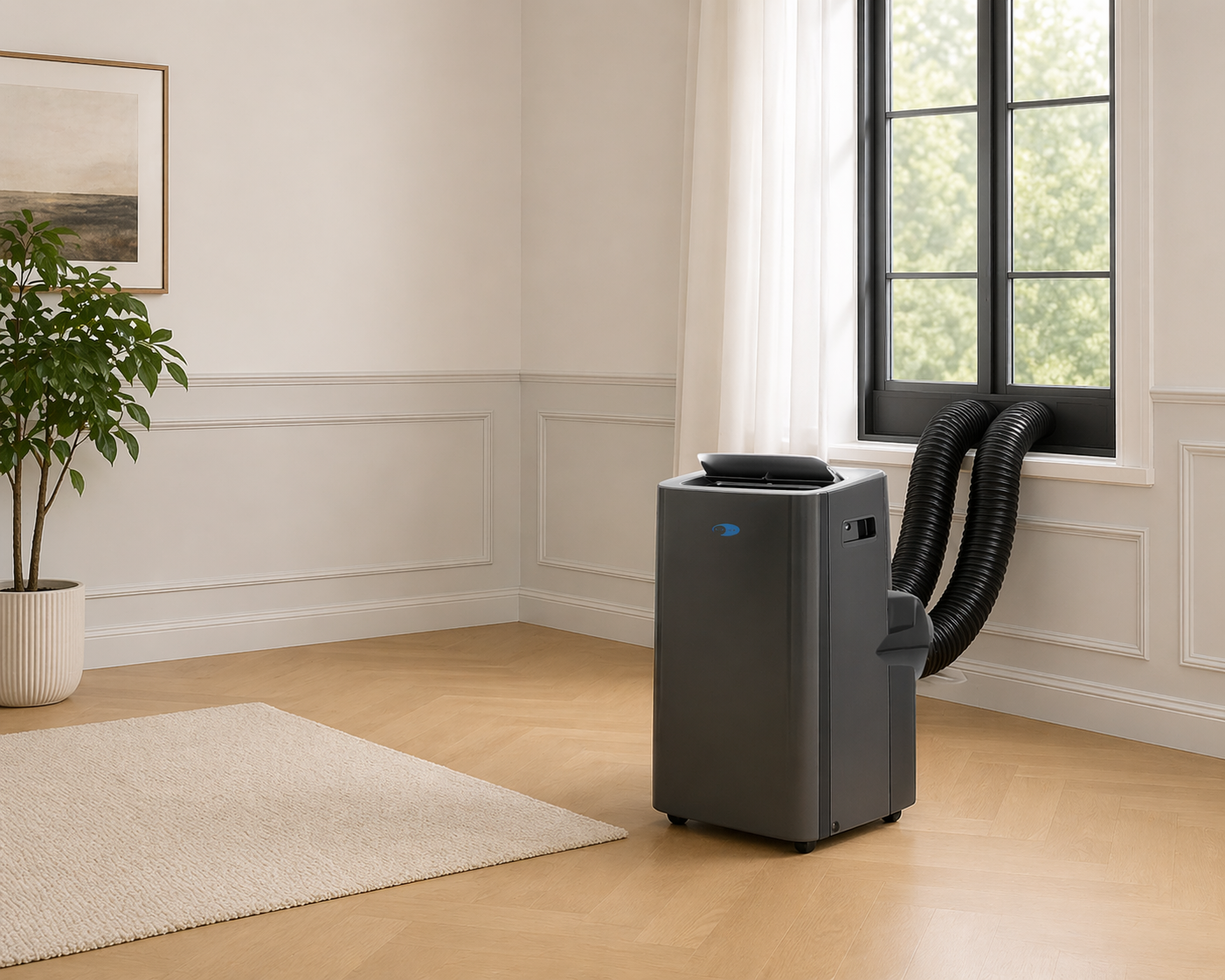
What size portable air conditioner do I need?
Buying the wrong-sized portable AC is one of the most common and expensive mistakes shoppers make. Too small, and your unit runs constantly without ever reaching your target temperature. Too large, and you’ll feel clammy and uncomfortable even when the display reads 70°F.
This guide walks you through everything you need to know about BTU sizing: what it means, how to calculate it for your specific room, and which Whynter model matches your needs.
What is a BTU, and why does it matter?
BTU stands for British Thermal Unit. It’s the standard measure of how much heat an air conditioner can remove from a room per hour. A higher BTU rating means the unit can cool a larger space or a hotter room more effectively.
For portable air conditioners, you’ll see two BTU numbers:
- ASHRAE BTU – The traditional industry measurement standard, often 10,000–14,000 BTU for a mid-size unit. It reflects maximum cooling capacity under controlled test conditions.
- SACC (DOE) BTU – The newer, standardized “Seasonally Adjusted Cooling Capacity” number is designed to reflect real-world conditions, accounting for factors like hose heat and air leakage.
While SACC ratings are useful for standardized, real-world comparisons, ASHRAE BTU reflects the unit’s maximum cooling capacity under ideal conditions. Understanding both numbers gives you a more complete picture of performance.
How to calculate the BTU you need
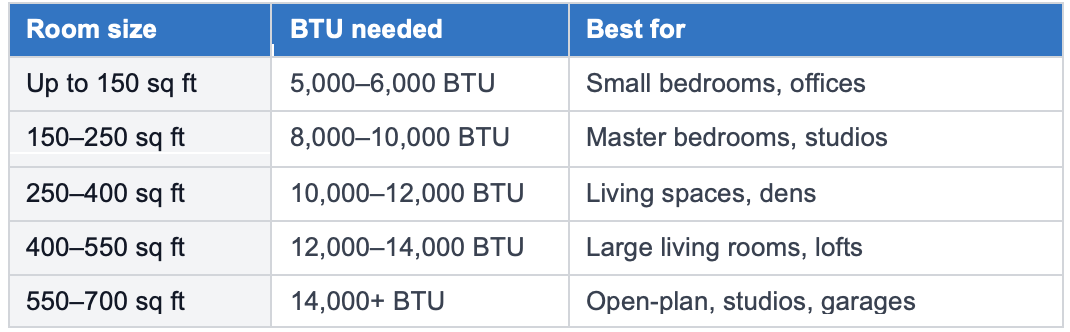
The starting point is simple: square footage. But several factors adjust the base calculation significantly. Here’s the formula that Whynter recommends:
Base BTU = Room Square Footage × 20
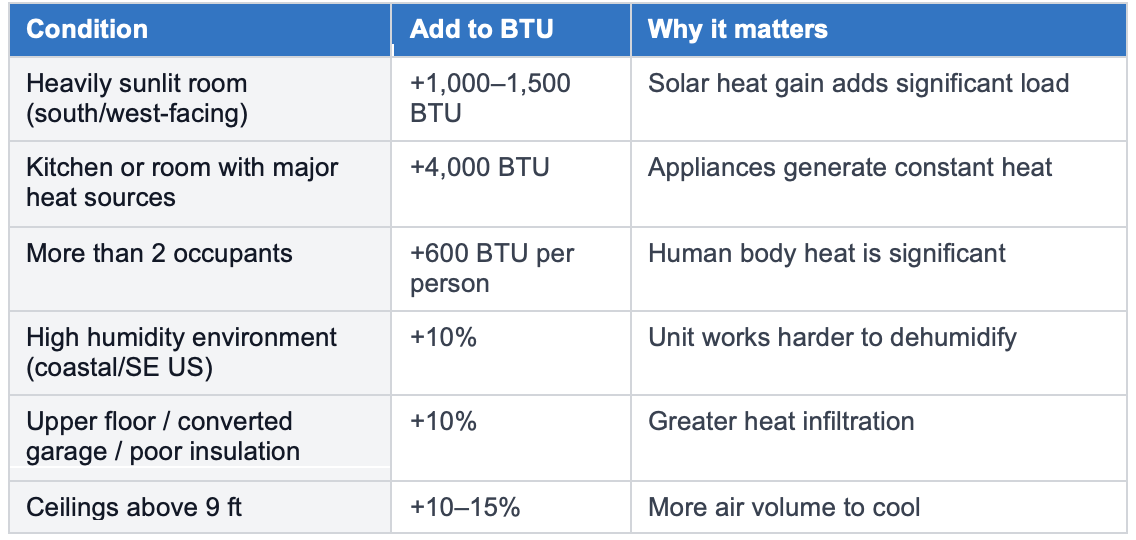
Then apply the adjustment factors below.
Adjustment factors
BTU by room size: quick reference chart
Why “too big” is a real problem
Most shoppers assume bigger is better when it comes to air conditioners. It’s an understandable instinct, but it’s wrong, and here’s why.
A unit that is too powerful for your room will cool the air quickly, reach your set temperature, then shut off without running long enough to remove humidity from the air. The result: a room that feels cool but clammy. You’ll raise the thermostat, the unit will run another short cycle, and you’ll repeat the pattern all day.
This is called “short cycling,” and it:
- Reduces overall comfort (high humidity feels hotter than it is)
- Increases wear on the compressor from frequent start/stop cycles
- Costs more to operate than a correctly sized unit running steady cycles
A properly sized Whynter unit runs in consistent, efficient cycles, cooling the air and pulling moisture from it simultaneously. That’s what delivers real comfort, not just a lower temperature number on a display.
Single-hose vs. dual-hose: the efficiency difference
Many portable ACs on the market are single-hose: one hose vents hot air out. The problem is that in doing so, they create negative pressure in the room, drawing hot, unconditioned air in through gaps around doors and windows to replace it. This forces the unit to constantly re-cool air it never intended to cool.
Whynter’s dual-hose models solve this with a second hose that pulls air from outside to cool the compressor, completely independent of the room air. The result:
- 30–40% greater efficiency vs. single-hose units of the same rated BTU
- No negative pressure / no hot air infiltration
- Faster cooling, lower energy bills, less strain on the compressor
Common BTU sizing mistakes (and how to avoid them)
Mistake 1: Relying on square footage alone
Square footage is a helpful starting point, but it doesn’t tell the whole story. Ceiling height, insulation, sun exposure, and room usage all affect how much cooling power you actually need. Two rooms with the same square footage can require very different BTU levels.
Mistake 2: Ignoring ceiling height
A 200 sq ft room with 10-foot ceilings has 25% more air volume than the same footprint with 8-foot ceilings. Square footage is your starting point, but cubic footage is what the unit actually has to condition.
Mistake 3: Forgetting heat sources
A computer workstation running all day, a kitchen with a six-burner range, or a room with a south-facing sliding glass wall, all of these add substantial heat load that your base BTU calculation doesn’t capture. Factor them in, or your unit will perpetually underperform.
When in doubt: size up, not down
If your calculation puts you between two sizes, go slightly larger, especially in hot or humid climates. The risks of slight oversizing are usually smaller than the frustration of a unit that can’t keep up.
Whynter dual-hose systems are designed to cool more efficiently and maintain more consistent performance than single-hose units, helping you get the most out of your chosen BTU rating.
See this post for more details.
Find the Right Whynter Portable AC for Your Space
Whynter portable ACs are a powerful, affordable alternative to central air conditioning — built for every room size and designed to keep you cool all summer long.