Choosing the Right Product
What does “panel ready” mean on a wine or beverage refrigerator?
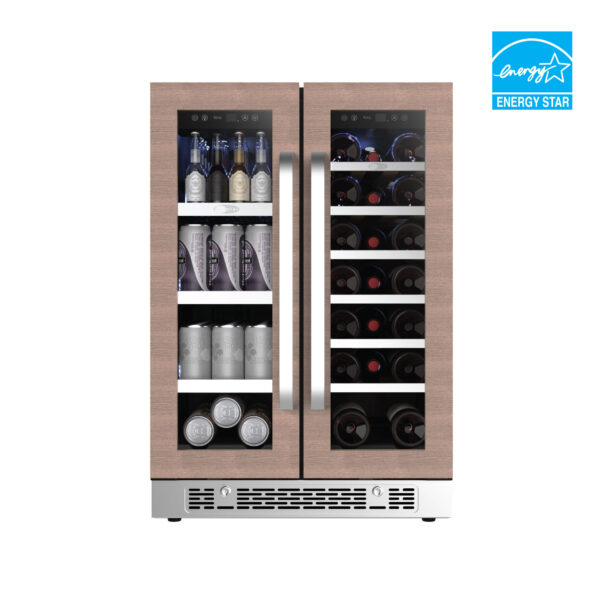
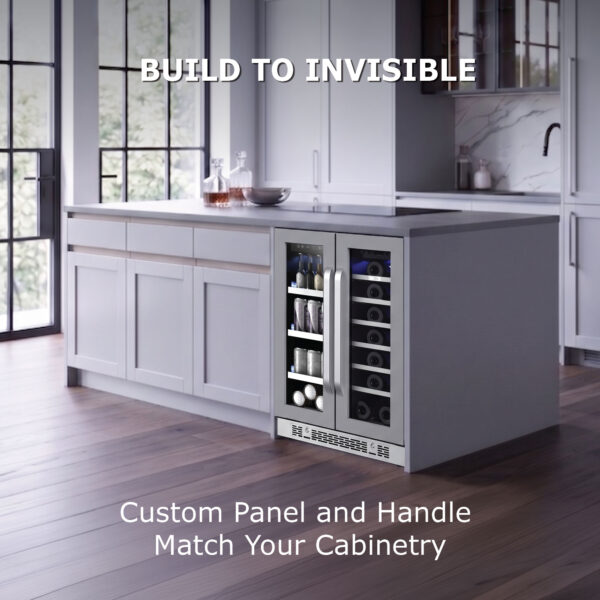
A panel-ready refrigerator ships with an unfinished door front designed to accept a custom cabinet panel that matches your kitchen cabinetry. Once the panel and your choice of hardware are installed, the unit disappears into the cabinet run for a fully integrated, built-in look. Whynter panel-ready wine and beverage refrigerators are front-vented undercounter units made specifically for this kind of flush, seamless installation.
What is the difference between panel-ready, built-in, and freestanding units?
A freestanding unit vents from the rear and needs open space around it, so it cannot be enclosed in cabinetry. A built-in (undercounter) unit vents through the front grille and can slide flush into a cabinet cutout, but keeps its factory stainless or glass door. A panel-ready unit is a built-in that additionally accepts a custom cabinet panel on the door, so the front matches your cabinetry instead of showing an appliance face.
Is the cabinet panel included with the refrigerator?
No. Panel-ready wine and beverage refrigerators from Whynter and across the industry ship without the decorative panel and handle. The panel is built and finished by your cabinet maker, kitchen designer, or contractor to match your cabinetry, then attached to the door front. Each Whynter panel-ready product page includes a panel specification sheet with the exact dimensions and mounting details your cabinet shop needs.
What is the difference between a beverage fridge and a mini fridge?
A beverage refrigerator is purpose-built for drinks: a glass door for display, adjustable shelves sized for cans and bottles, precise digital temperature control, and interior LED lighting. A mini fridge is a scaled-down kitchen refrigerator designed for general food storage, usually with a solid door. Because the shelving is designed around cans, a beverage fridge holds far more drinks in the same footprint. If the goal is cold drinks at a glance, choose a beverage fridge.
Who makes and installs the custom panel, and what does it cost?
Most buyers have the panel made by the cabinet shop handling their kitchen, since it must match the surrounding door fronts in material, finish, and reveal. A local carpenter can also build and mount one from the panel spec sheet. Simple shaker or slab panels typically run a few hundred dollars; premium materials and professional installation cost more. If you are ordering cabinets anyway, ask for the appliance panel in the same order.
Can I use a built-in beverage fridge as freestanding — or a freestanding model as built-in?
One direction works, the other does not. A built-in unit runs fine freestanding because it vents from the front; just leave a few inches of clearance for convenience. A freestanding unit should never be enclosed: its rear-vented heat gets trapped, forcing the compressor to overwork, reducing cooling performance and potentially shortening the life of the unit.
Do I need a single-zone or dual-zone unit?
A single-zone beverage fridge keeps the entire cabinet at one temperature, which is ideal when storing one kind of drink — soda, beer, sparkling water. A dual-zone unit has two independently controlled compartments, so you can keep beer in the mid-30s°F while holding wine in the 50s°F. If you plan to mix cans and wine in one cabinet, choose one of Whynter’s dual-zone beverage/wine centers.
How is can capacity measured — and will bottles or taller cans fit?
Rated capacity is based on standard 12 oz. cans with the cabinet filled only with cans. Bottles, 16 oz. cans, and cartons take more room and reduce the total count. The tempered glass shelves can be removed and repositioned to make space for taller containers. As a rule of thumb, plan on roughly two-thirds of the rated can capacity when storing a mix of sizes.
Can I put a beverage fridge in my garage?
Only if the garage stays within the unit’s rated ambient range — roughly 50–90°F for most indoor beverage fridges. In a hot garage, the compressor runs continuously and struggles to hold temperature; in an unheated winter garage, the thermostat may stop cycling properly. Indoor-rated units should not be used outdoors. For covered patios and outdoor kitchens, Whynter offers indoor/outdoor-rated beverage refrigerators built for wider conditions.
What temperature should I set my beverage fridge to?
Set 38–42°F for soda, sparkling water, and mixed drinks storage. Lagers and light beers are best at 35–40°F; ales and stouts at 45–55°F. For ice-cold everything, run the unit near its low end — Whynter beverage refrigerators adjust down to the mid-30s°F. Avoid changing the setpoint frequently; a steady temperature is more efficient and keeps carbonated drinks tasting right.
How much clearance does a beverage fridge need for ventilation?
Built-in models need only a clear front grille — keep it free of dust and don’t block it with baseboards or trim. Freestanding models need at least 4–6 inches of open space at the back and sides so the compressor can shed heat. Exact clearances for each model are listed in its user manual, available on every Whynter product page.
Do the shelves come out?
Yes. Whynter beverage refrigerators use removable, repositionable shelves. Lift a shelf out entirely to fit 2-liter bottles or wine upright, or move it up a notch for 16 oz. and 19.2 oz. cans. Slide-out shelving also makes cleaning the interior easier.
Can the door be reversed?
Yes — Whynter’s single-door beverage refrigerators ship with reversible hinges so the door can swing left or right to suit your layout, and the needed hardware is included. Reversal steps are in each model’s user manual. French-door models are the exception, since their double doors open from the center.
How loud is a beverage fridge?
Whynter beverage refrigerators run quietly, under about 40 dB, comparable to a library or soft conversation. You’ll hear a low hum when the compressor cycles on and an occasional gurgle as refrigerant moves; both are normal. Persistent buzzing or rattling usually means the unit isn’t level or is touching a wall or cabinet; releveling typically solves it.
How much electricity does a beverage fridge use?
Not much. A typical compressor beverage fridge draws roughly 85–140 watts while cooling and cycles on and off, working out to around 1 kWh per day; a few dollars per month at average U.S. electricity rates. Actual use depends on cabinet size, setpoint, room temperature, and how often the door is opened. A full cabinet holds cold better than an empty one.
How long does it take to cool down after first plugging it in?
After delivery, let the unit stand upright and unplugged for at least 2 hours (24 hours if it was transported on its side) so the compressor oil settles. Once running, an empty cabinet typically reaches its setpoint within a few hours; a full load of room-temperature cans can take overnight to chill completely. Cooling time also depends on room temperature and door openings.
What does the activated carbon filter do, and how often should I replace it?
The activated carbon filter scrubs odors from the air inside the cabinet, keeping the interior fresh — useful in a glass-door unit that’s opened often and shares space with snacks. Replace the filter about every six months for best results. Replacement filters and part details are available through Whynter product support.
Why is there condensation inside my beverage fridge?
A small amount of moisture is normal, especially in humid weather and on glass-door models. Excessive condensation usually means the door is being opened frequently, the door isn’t sealing fully, or the cabinet is overcrowded and blocking air circulation. Wipe the interior dry, check that the gasket seals evenly on all sides, and confirm the unit is level so the door closes on its own.
What should I check if my beverage fridge isn’t cooling?
Work through this checklist before calling support:
- Confirm the unit has power, the display is on, and check the setpoint wasn’t changed.
- Check ventilation — front grille clear on built-ins; 4–6 inches of clearance on freestanding units.
- Inspect the door gasket for gaps and make sure the unit is level.
- If you just loaded warm drinks or changed the setting, allow up to 24 hours to stabilize.
- Vacuum dust from the vent/condenser area.
- Still warm? Contact Whynter via live chat or the contact page with your model and serial number.
What warranty comes with Whynter beverage refrigerators?
Whynter beverage refrigerators include a one-year limited warranty covering defects in materials and workmanship. Register your product and find full terms on the warranty information page. User manuals are posted on each product page.
What thickness should the custom panel be?
Industry-standard cabinet panels are 3/4 inch (19 mm) thick, which matches typical cabinet door fronts and works with most panel-ready door assemblies. Confirm the thickness and maximum panel weight in the panel specification sheet for your Whynter model before your cabinet shop builds it, as an overweight panel can strain hinges and affect the door seal.
Will a panel-ready unit fit under a standard countertop?
Yes. Whynter panel-ready wine and beverage refrigerators are undercounter units sized for standard cabinet openings — nominal 15-inch and 24-inch widths that fit under a standard 36-inch counter with an adjustable leveling allowance. Before cutting cabinetry, work from the cutout dimensions on the product page rather than the unit’s overall dimensions, since the cutout accounts for clearances and door swing.
Do panel-ready refrigerators need ventilation clearance?
Panel-ready units are front-vented: the compressor draws and exhausts air through the grille below the door, so the sides, top, and back can sit flush against cabinetry with zero clearance. What matters is keeping that front grille unobstructed and never enclose it behind a toe-kick or cabinet frame. A blocked front vent forces the compressor to run hot and constantly, which shortens its life and raises energy use.
Should I choose a wine refrigerator or a beverage refrigerator?
Choose by what you will store. Wine refrigerators hold a warmer 41–68°F range with wooden shelving contoured for bottles lying on their sides. Beverage refrigerators run colder down to 34°F for cans, beer, water, and mixers on flat shelves. If you want both, pair a wine and a beverage unit side by side under the counter, or choose Whynter’s panel-ready French-door wine and beverage combination, which cools wine and drinks in separate zones behind matching panels.
Can I store wine in a beverage refrigerator?
For short-term storage of everyday bottles you plan to drink within a few weeks, set the beverage unit toward the top of its range. For anything longer, use a wine refrigerator: beverage centers run colder than the 55°F wine-storage standard, and their flat shelves keep bottles upright, which lets corks dry out over time. Wine units also minimize vibration, which matters for bottles you are aging.
Should I get a single-zone or dual-zone wine refrigerator?
A single zone keeps the whole cabinet at one temperature, the right choice if your collection leans one way or you store everything at a 55°F cellar temperature and chill whites before serving. A dual zone has two independently controlled compartments, typically whites at 45–50°F in one and reds at 55–65°F in the other, so both are serving-ready. Whynter’s panel-ready line includes both formats in a 24-inch width.
What temperature should I set my wine refrigerator to?
For long-term storage of any wine, red or white, 55°F (13°C) is the widely cited cellar standard. Wine Spectator recommends storing both at about 55°F. For serving, set whites at 45–50°F and reds at 55–65°F, which dual-zone owners can hold simultaneously. Consistency matters more than the exact number: a stable 57°F is better for wine than a fluctuating 55°F.
What temperature should I set a beverage refrigerator to?
Most owners run beverage centers at 36–40°F, which serves beer, soda, sparkling water, and mixers properly cold. Whynter panel-ready beverage refrigerators reach down to 34°F for near-ice-cold drinks. If you keep a few everyday wine bottles alongside cans, set the unit toward the top of its range as a compromise or store wine in a dedicated wine unit.
How loud are panel-ready wine and beverage refrigerators?
Compressor-based undercounter units in this category typically run in the low-40s dB range, comparable to a quiet library, and quieter than a dishwasher. The compressor cycles rather than runs continuously, and a flush cabinet installation helps mask the sound. In an open kitchen or entertaining space, this level fades into normal background noise; you will hear a soft hum when the compressor kicks on.
Can I install a panel-ready refrigerator in a garage or outdoors?
Whynter panel-ready wine and beverage refrigerators are designed for indoor, climate-controlled spaces. In an uninsulated garage, summer heat forces the compressor to run constantly and winter cold can stop the thermostat from cycling, leaving contents too warm or frozen; outdoor use also exposes electronics to moisture. Install these units in kitchens, butler’s pantries, bars, or other conditioned rooms, and keep ambient temperature within the range in the owner’s manual.
Do Whynter panel-ready refrigerators have a door lock?
Whynter’s panel-ready beverage refrigerators include a built-in door lock, a feature most panel-ready competitors omit. A lock keeps beer, hard seltzer, and other adult beverages secured from children at home, and controls access in offices, rentals, and hospitality settings. The panel-ready wine models rely on placement and household supervision; check each product page for lock details on a specific model.
Are Whynter panel-ready refrigerators Energy Star certified?
Whynter’s panel-ready wine refrigerators are Energy Star certified, meaning their energy use is independently verified to meet EPA efficiency standards; a certification most competing panel-ready brands do not carry. Beyond lower operating costs, Energy Star certification can qualify the purchase for utility rebates in many service territories; check your local utility’s rebate finder before you buy.
What warranty and support come with Whynter panel-ready refrigerators?
Whynter panel-ready wine and beverage refrigerators are covered by Whynter’s standard limited warranty, with US-based customer support by phone, email, and live chat. Full terms are on the warranty information page, and owner’s manuals and replacement-part resources are available through product support. Register your unit after purchase to streamline any future service claim.
What is the difference between single zone and dual zone wine refrigerators?
Single zone units keep one consistent temperature throughout the cabinet. They’re ideal for storing one type of wine. Dual zone units provide two separate temperature-controlled sections so you can store reds and whites at their preferred temperatures at the same time.
How much space do I need for ventilation?
Built-in units only need clearance at the front for ventilation. Freestanding units require at least 4 to 6″ of space at the back and sides so the compressor can breathe properly. For full details, see the installation manual.
Do the shelves come out?
Yes. Shelves can be removed or repositioned depending on the model. This lets you store larger bottles when needed.
What temperature should I set my wine refrigerator to?
For single zone units, a middle range around the low to mid 50s works for most wines. For dual zone models, the upper zone is typically set for reds in the mid to upper 50s and the lower zone for whites in the mid 40s to low 50s.
Can I store other beverages in my wine refrigerator?
You can, though keep in mind the shelves are designed for wine bottles. Cans and other bottles may fit differently depending on size.
Are Whynter wine refrigerators noisy?
They run quietly. Like any refrigeration appliance, you’ll hear a low hum during compressor cycles, but it shouldn’t be disruptive.
How long does it take to cool after first plugging in?
Most units reach the set temperature within a few hours, though this can vary depending on ambient temperature, how often the door is opened, and how full the unit is.
Can the door be reversed?
Many models come with a reversible door, but not all. Check your specific model to confirm.
What should I do if I see condensation inside?
A small amount of moisture can be normal. If it becomes excessive, check that the door is sealing properly and that the room isn’t too humid.
My unit isn’t cooling properly after installation, what should I check?
Most post-installation cooling issues trace to the installation itself. Check, in order:
- Front vent — confirm the grille below the door is fully open, not blocked by a toe-kick, trim, or debris.
- Door seal — verify the custom panel isn’t preventing the door from closing flush and the gasket seals all the way around.
- Settling time — after delivery or moving, let the unit stand upright 24 hours before powering on, then allow another 24 hours to reach set temperature.
- Ambient temperature — confirm the room is within the operating range in the manual.
If cooling problems persist, contact Whynter support or start a live chat.