Accessibility Tools

Whynter LLC

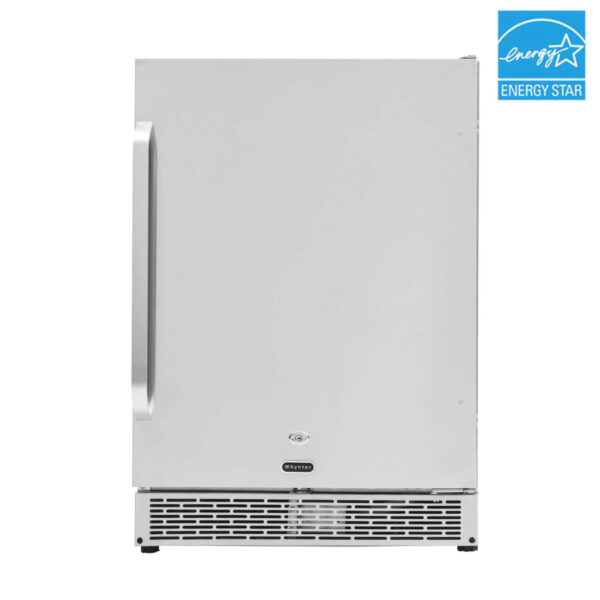
Whynter BWB-2060FDS/BWB-2060FDSa 24″ Built-In French Door Dual Zone Wine & Beverage Refrigerator – 20 Bottles / 76 Cans

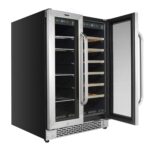
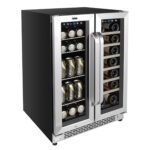
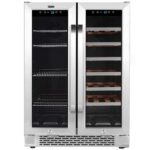
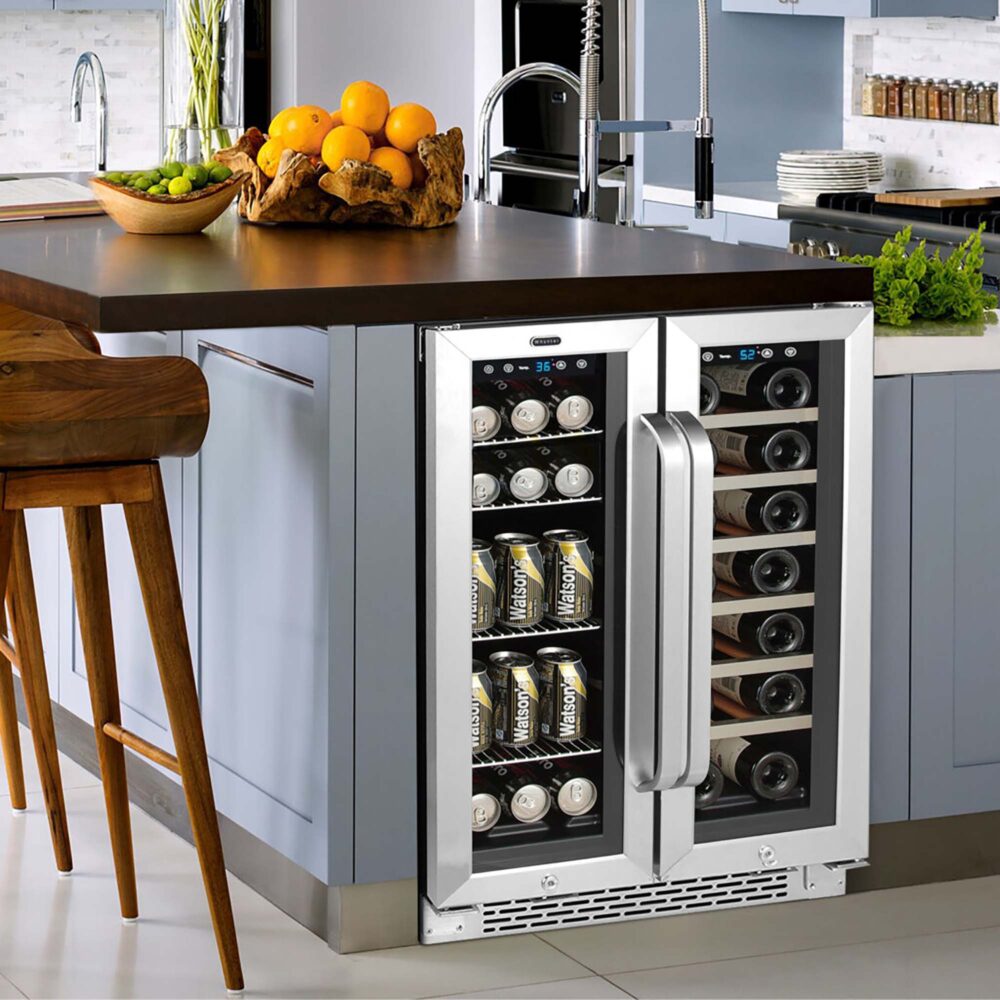
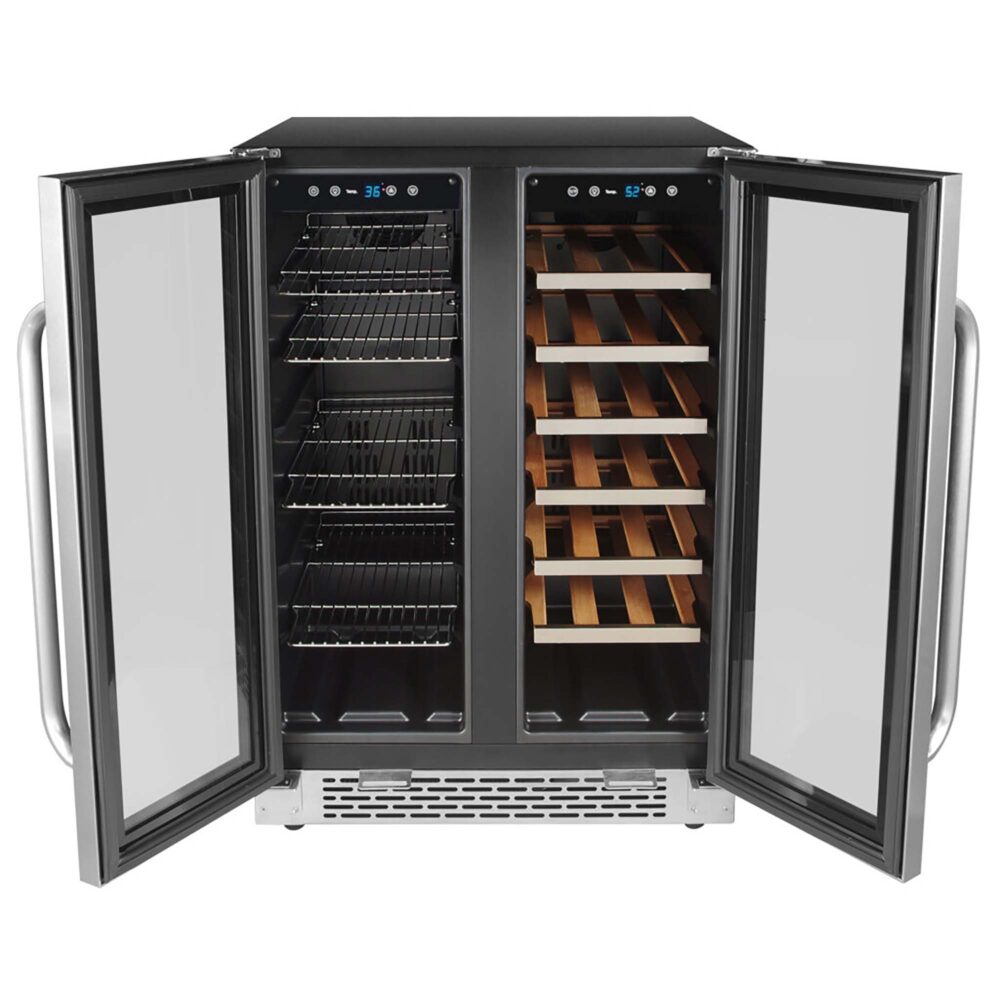
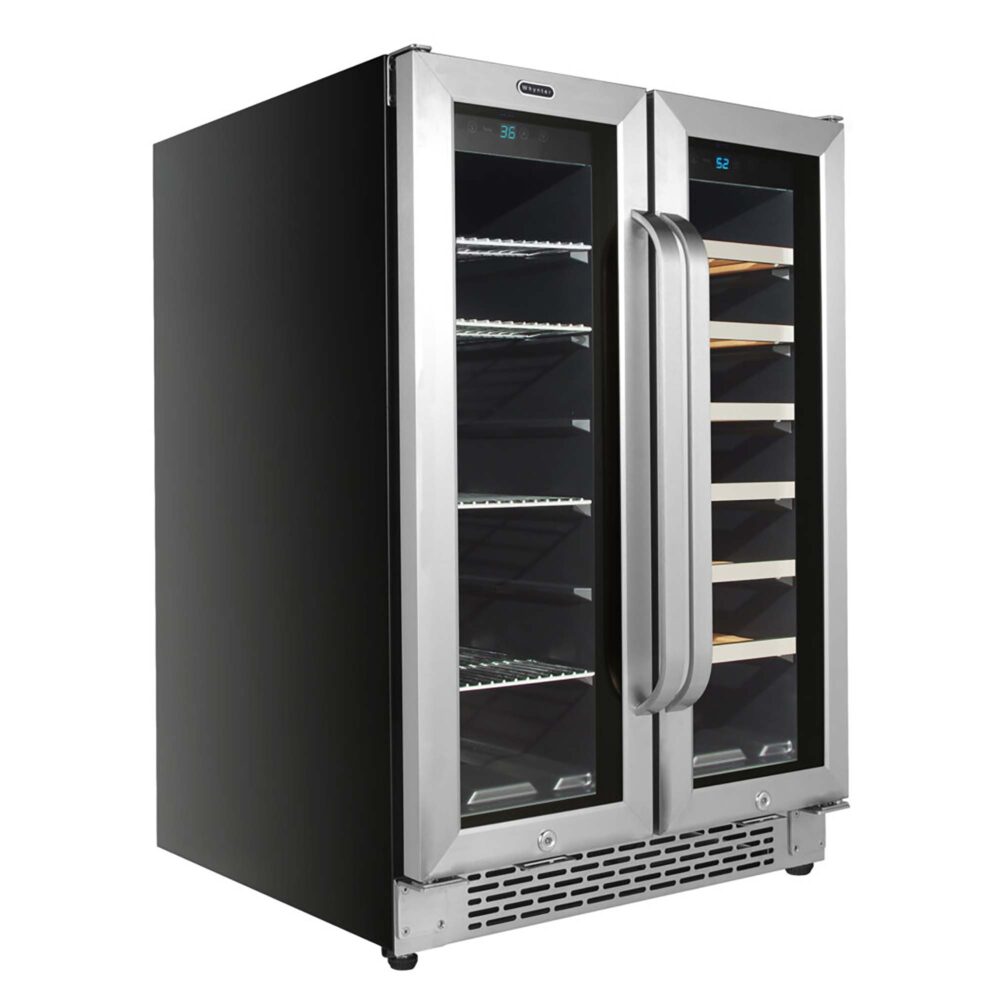
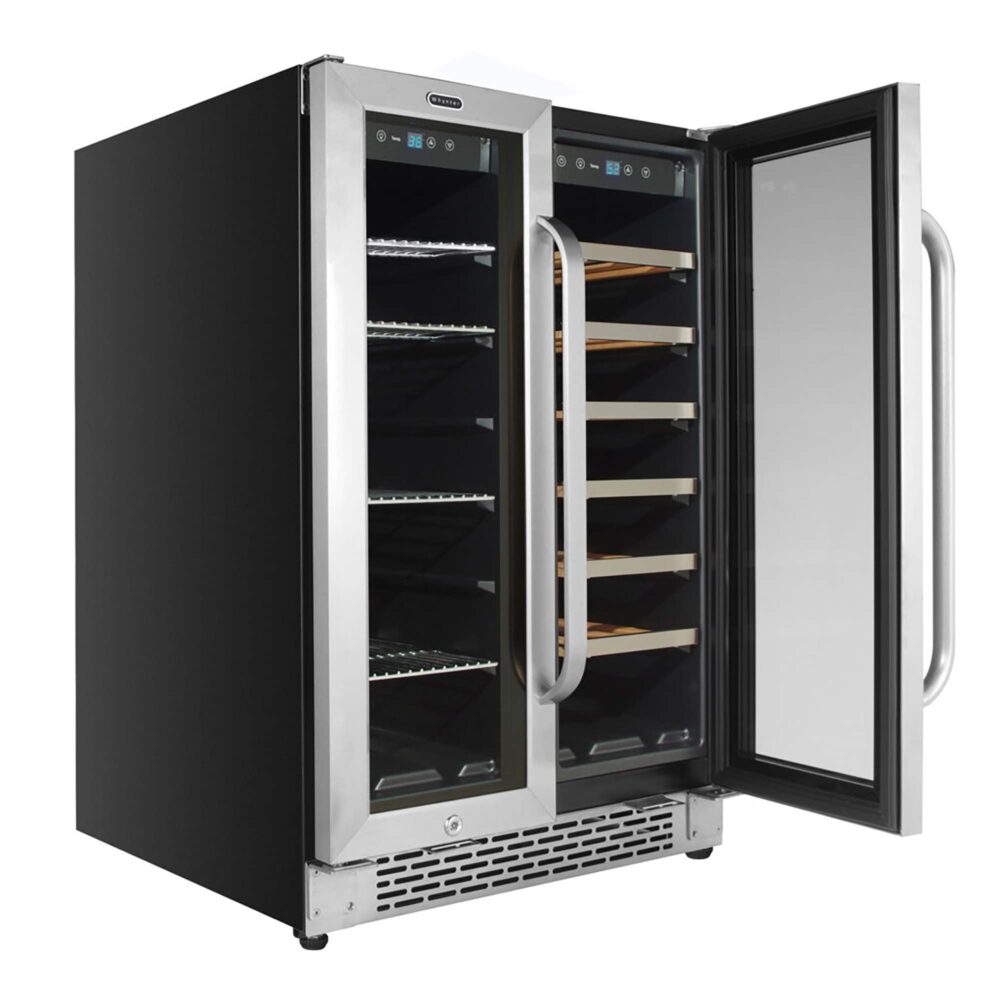
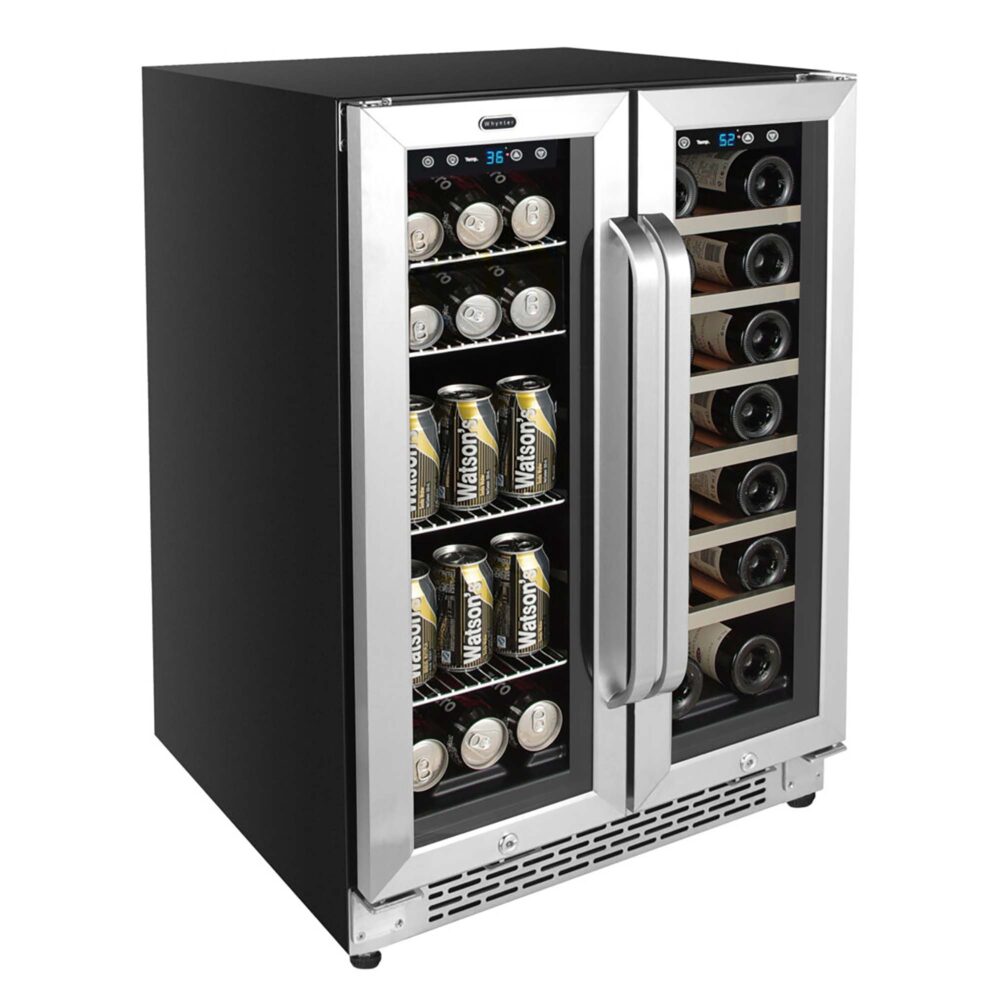
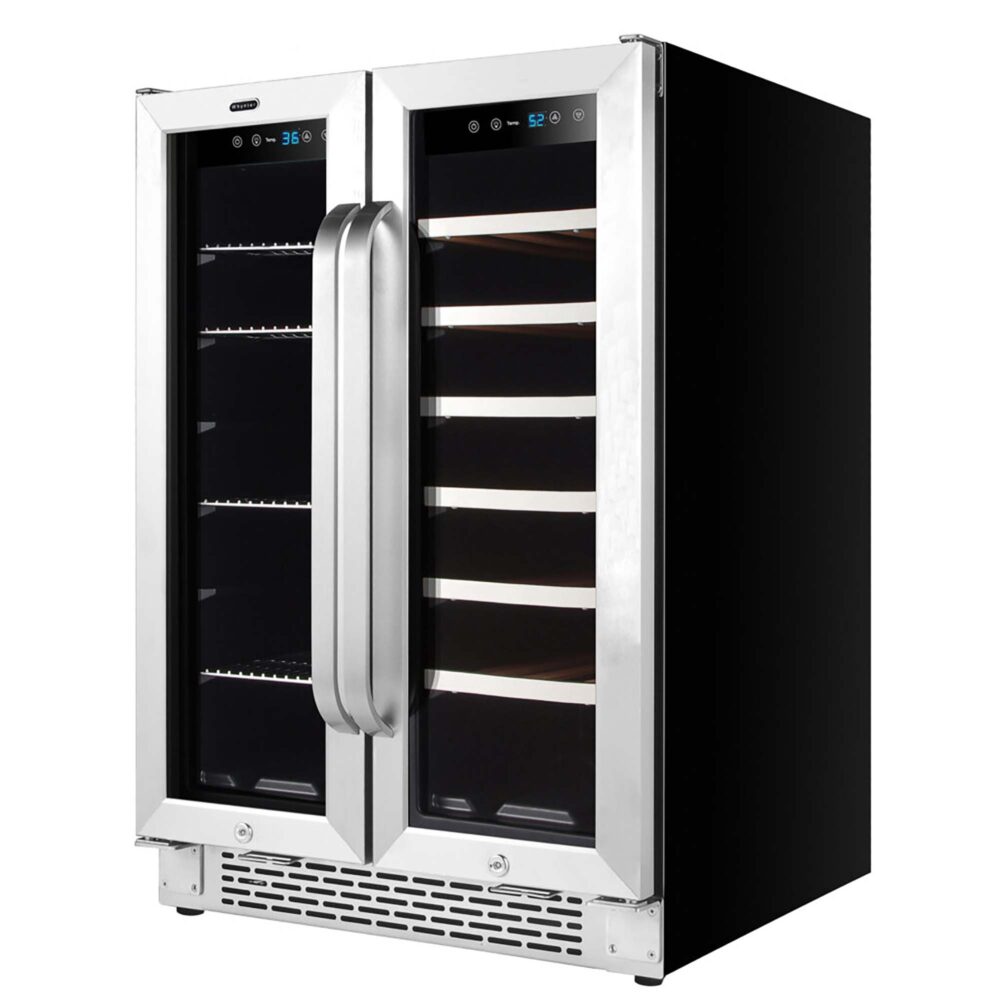
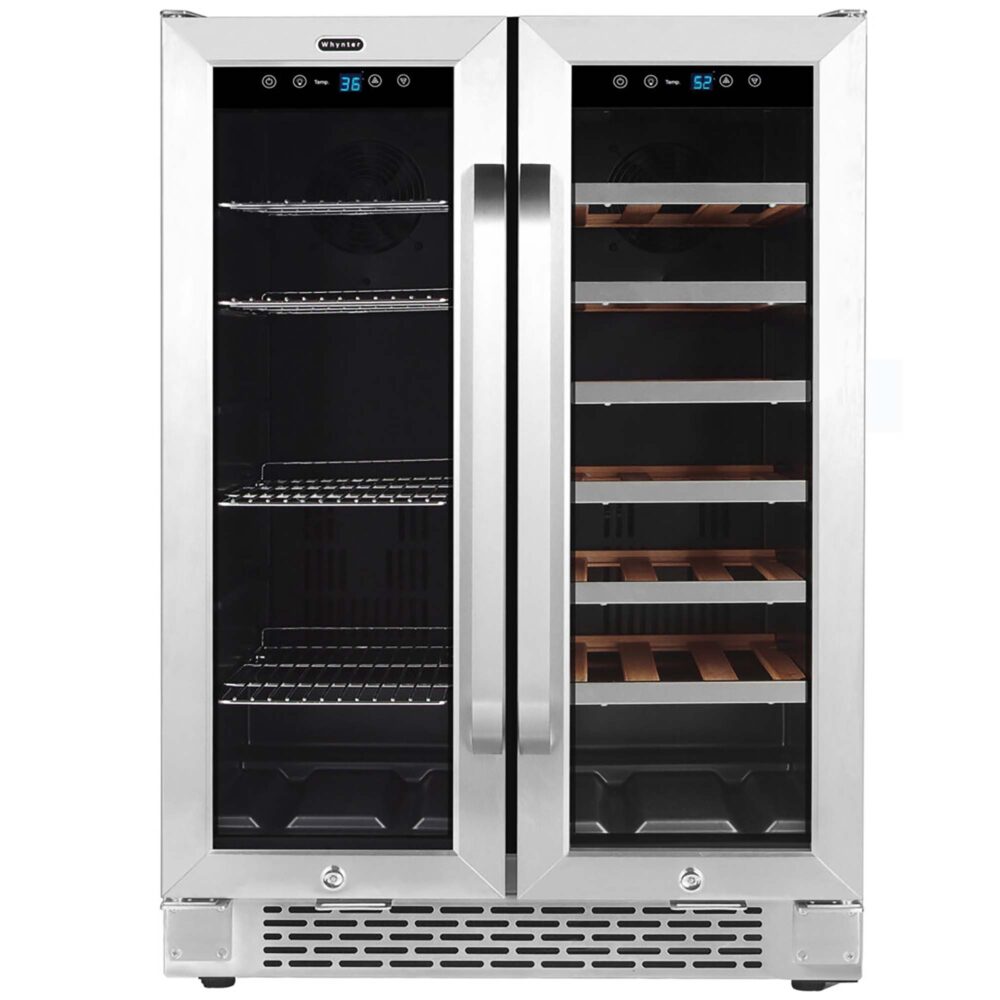
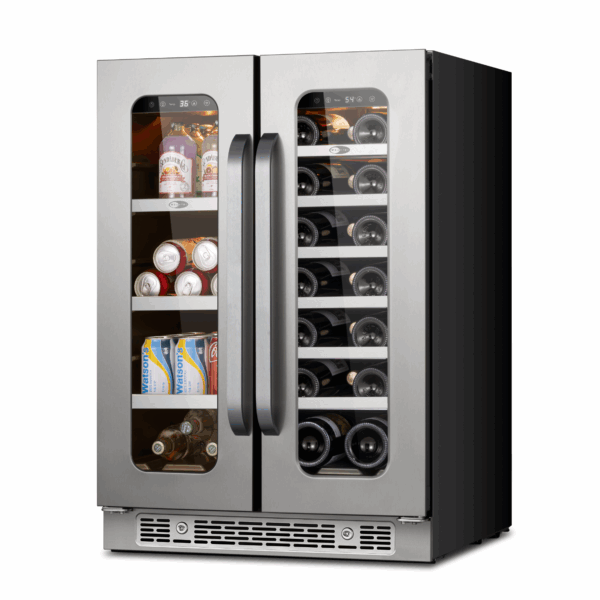
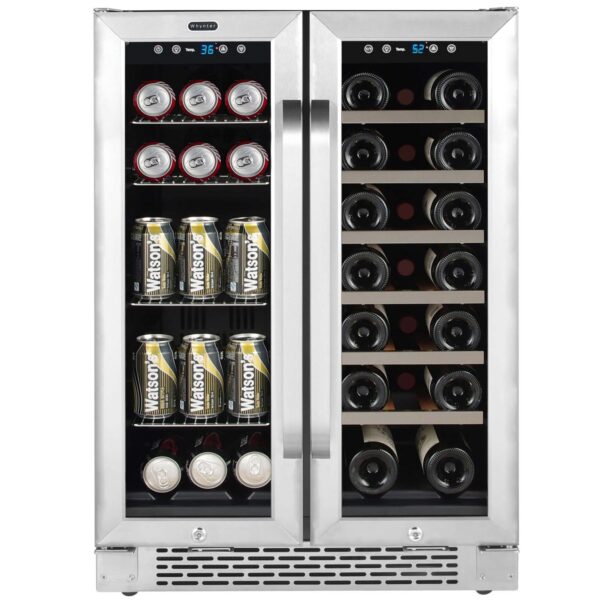
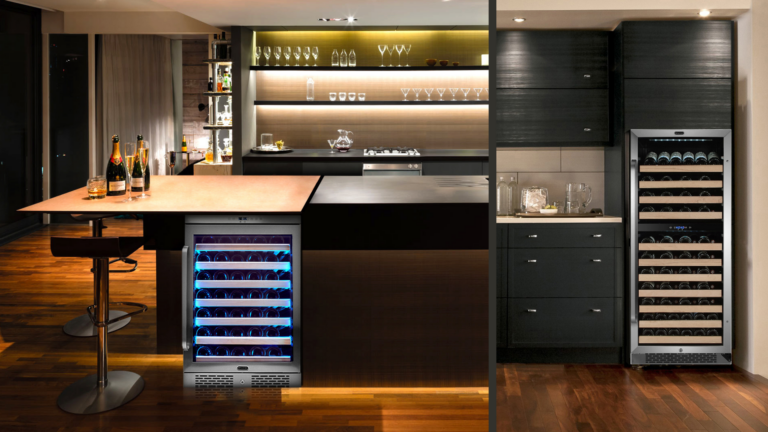
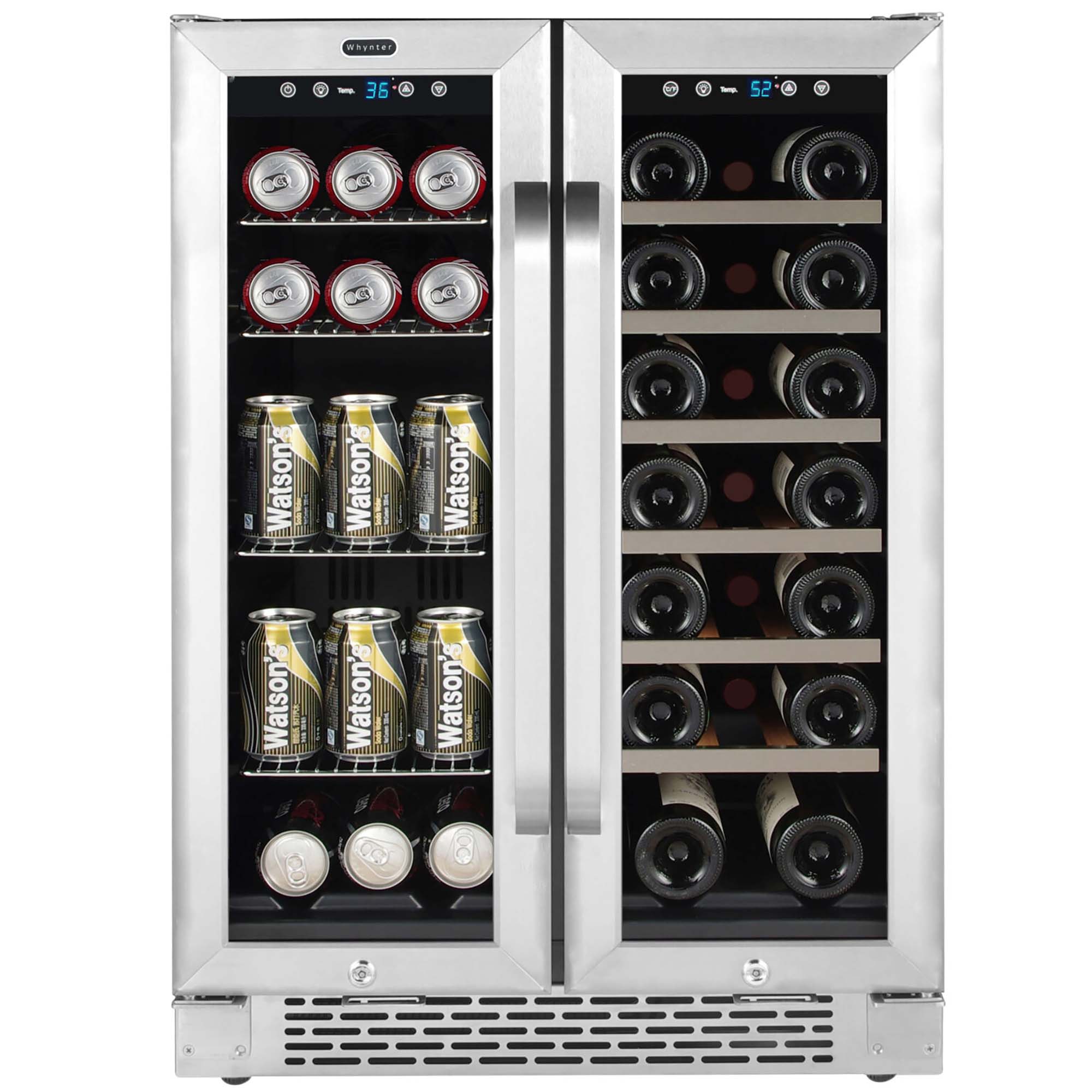
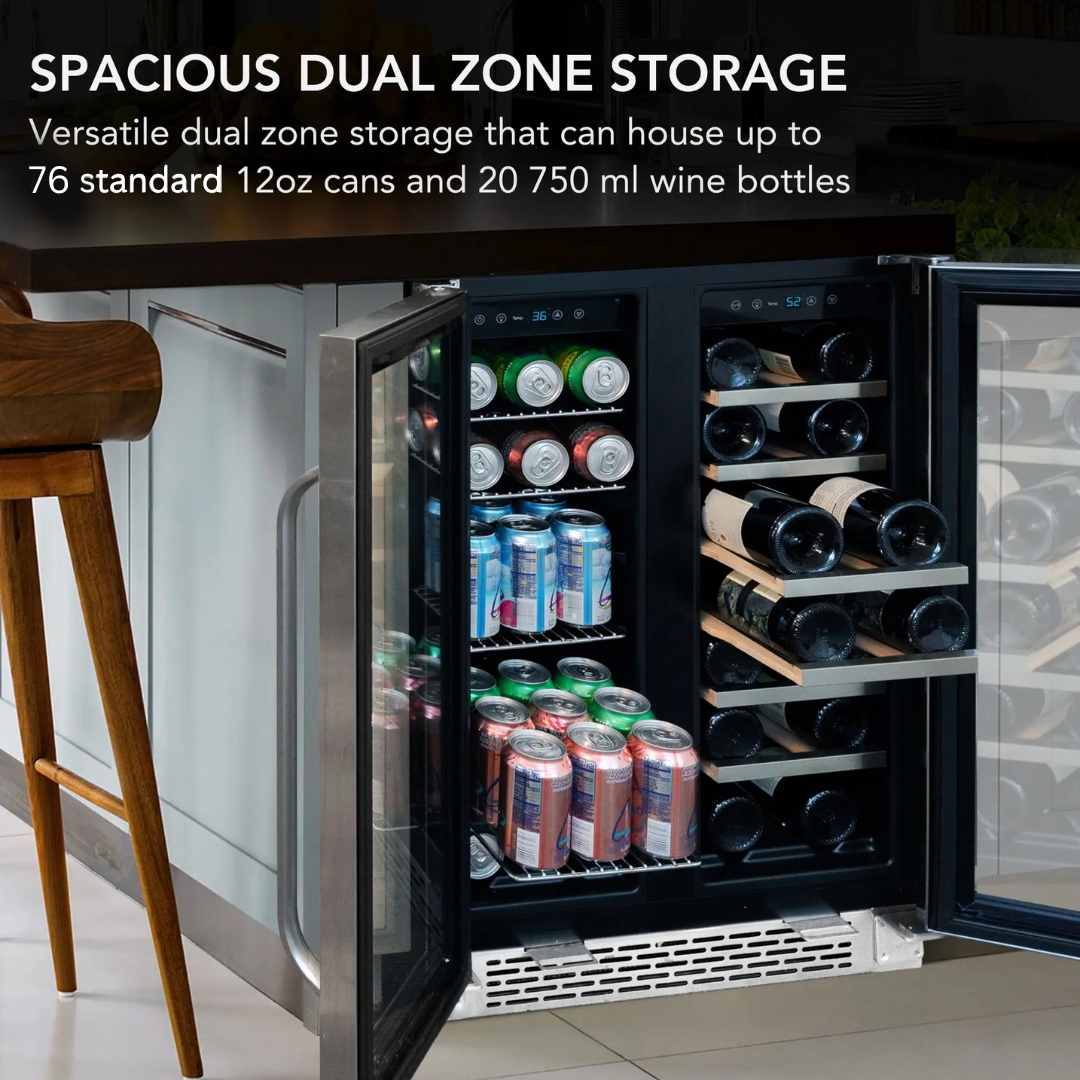
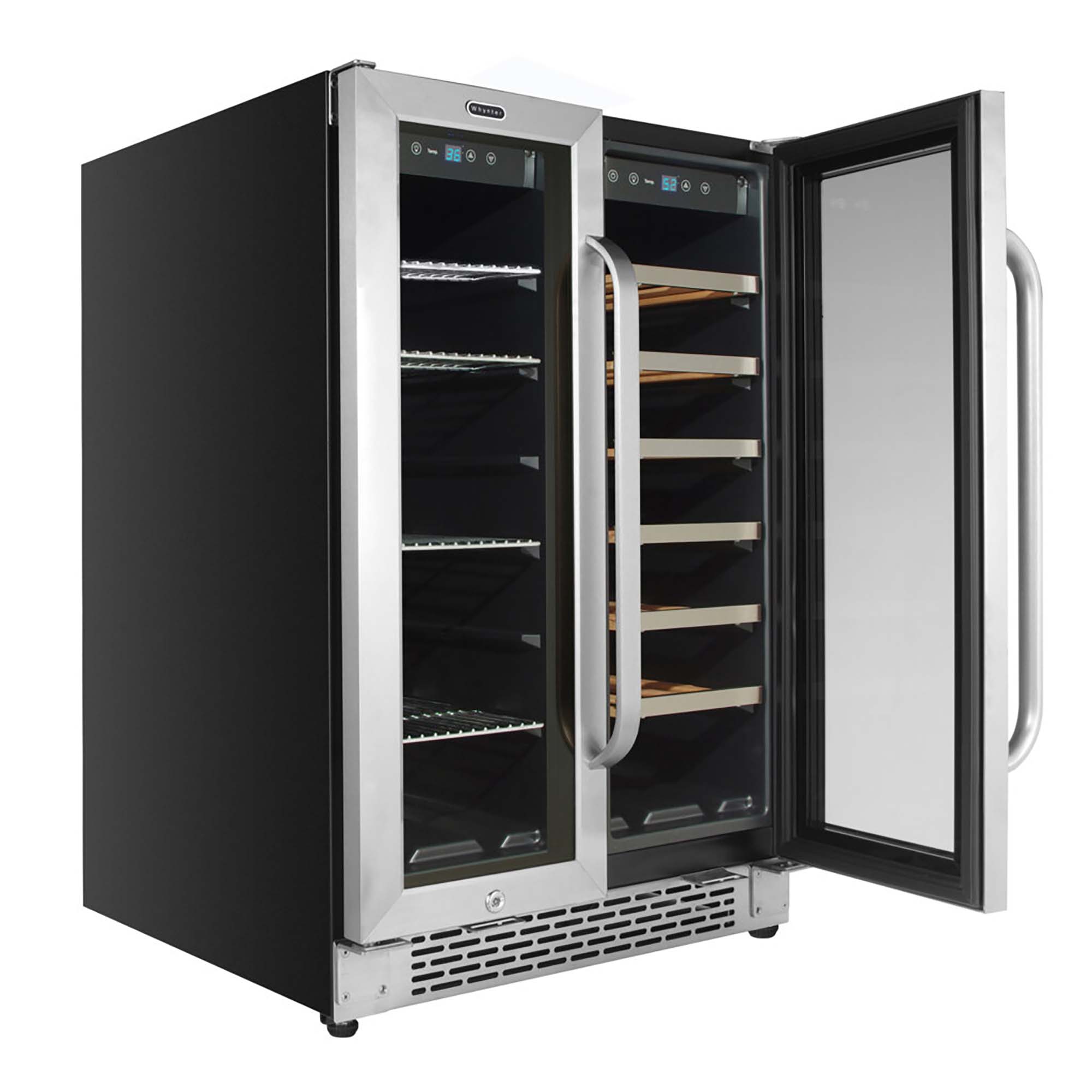
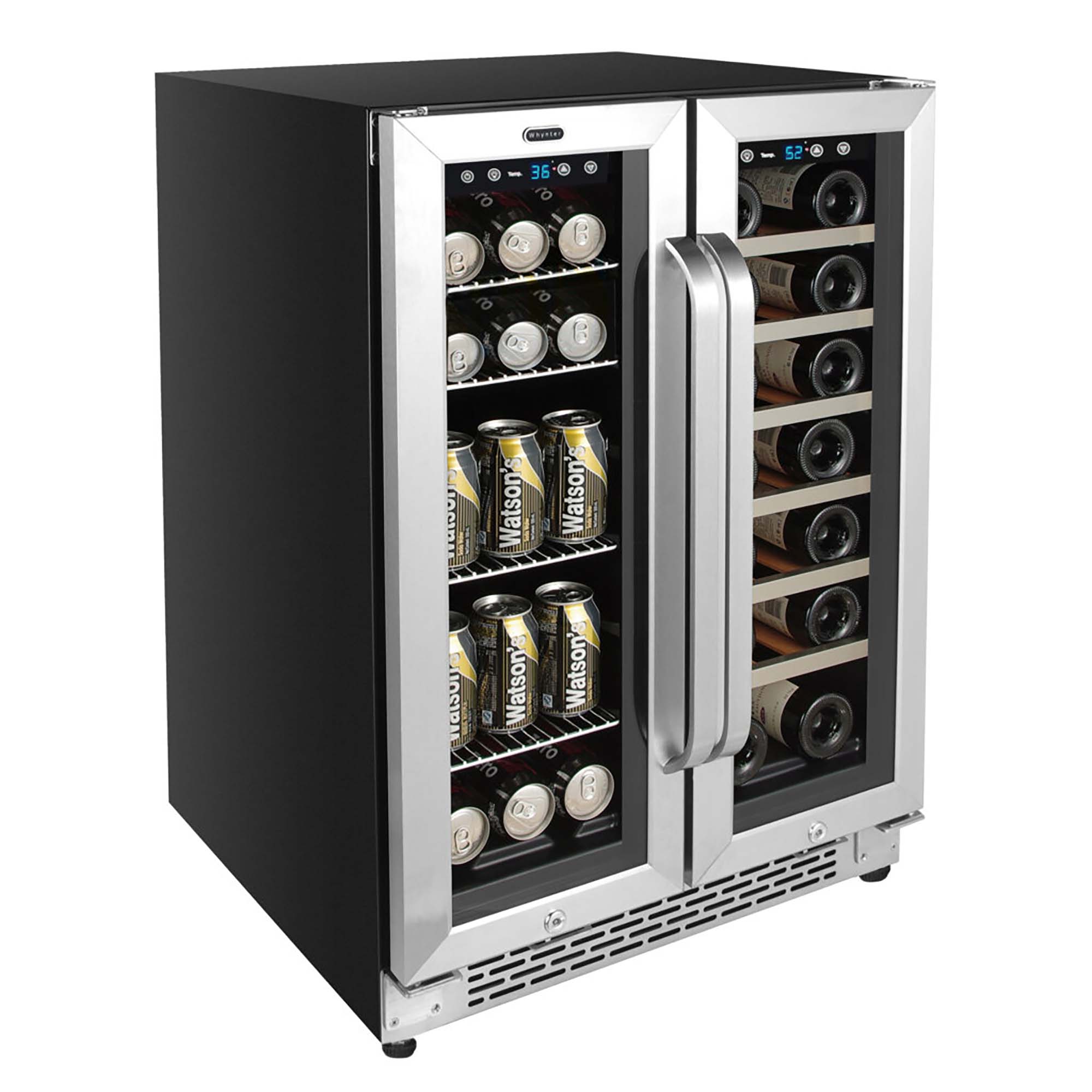
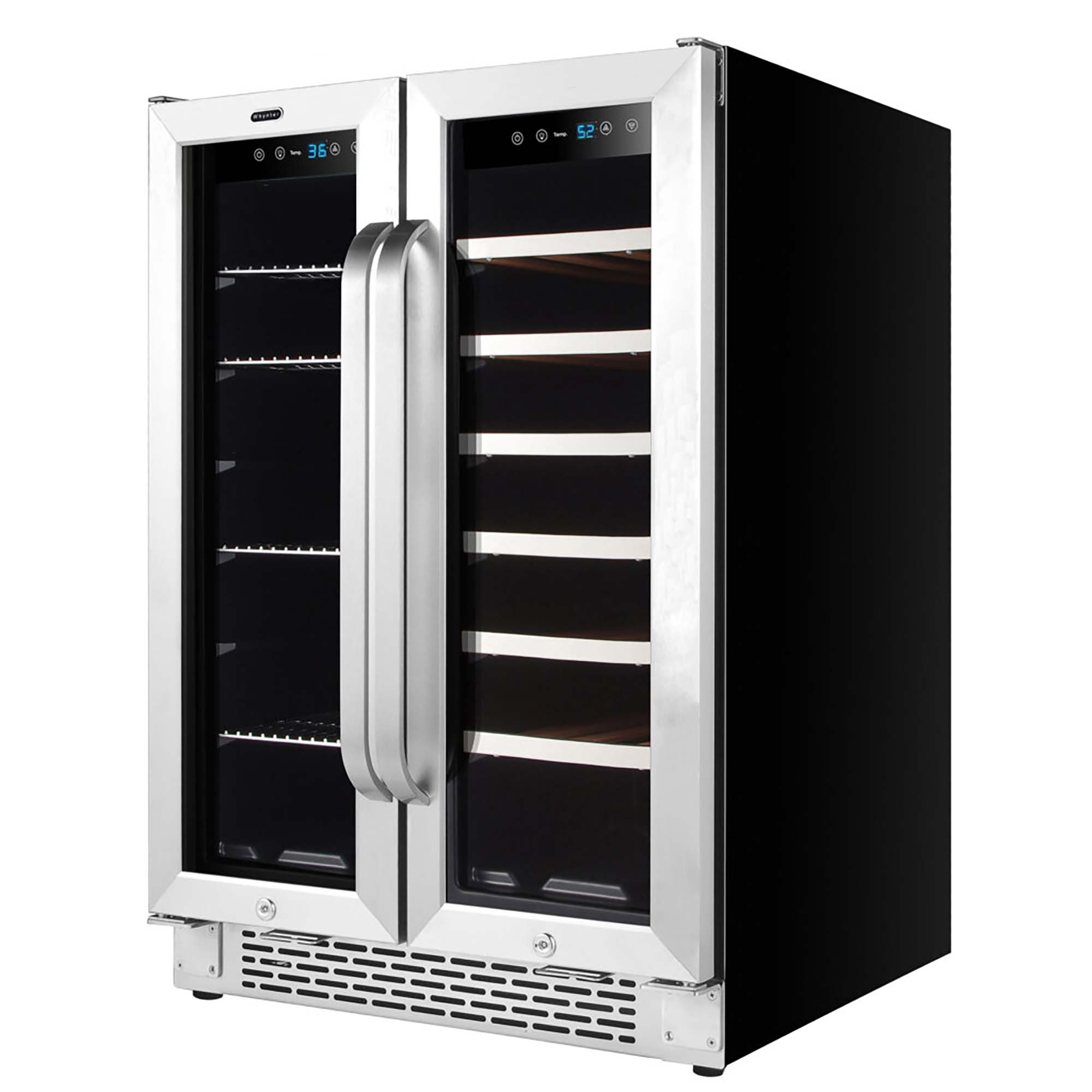
Store your favorite beverages with style in this built-in dual zone wine fridge from Whynter. The 24” beverage center can hold 76 standard 12 oz cans in its left zone, and 20 standard 750 ml wine bottles in its right zone, making it perfect for casual parties, dinners, or any other at-home beverage needs. The convenient see-through glass doors mean you can see all the cans and bottles displayed while the door is closed to save energy. This French door dual zone wine & beverage cooler is sophisticated and convenient.

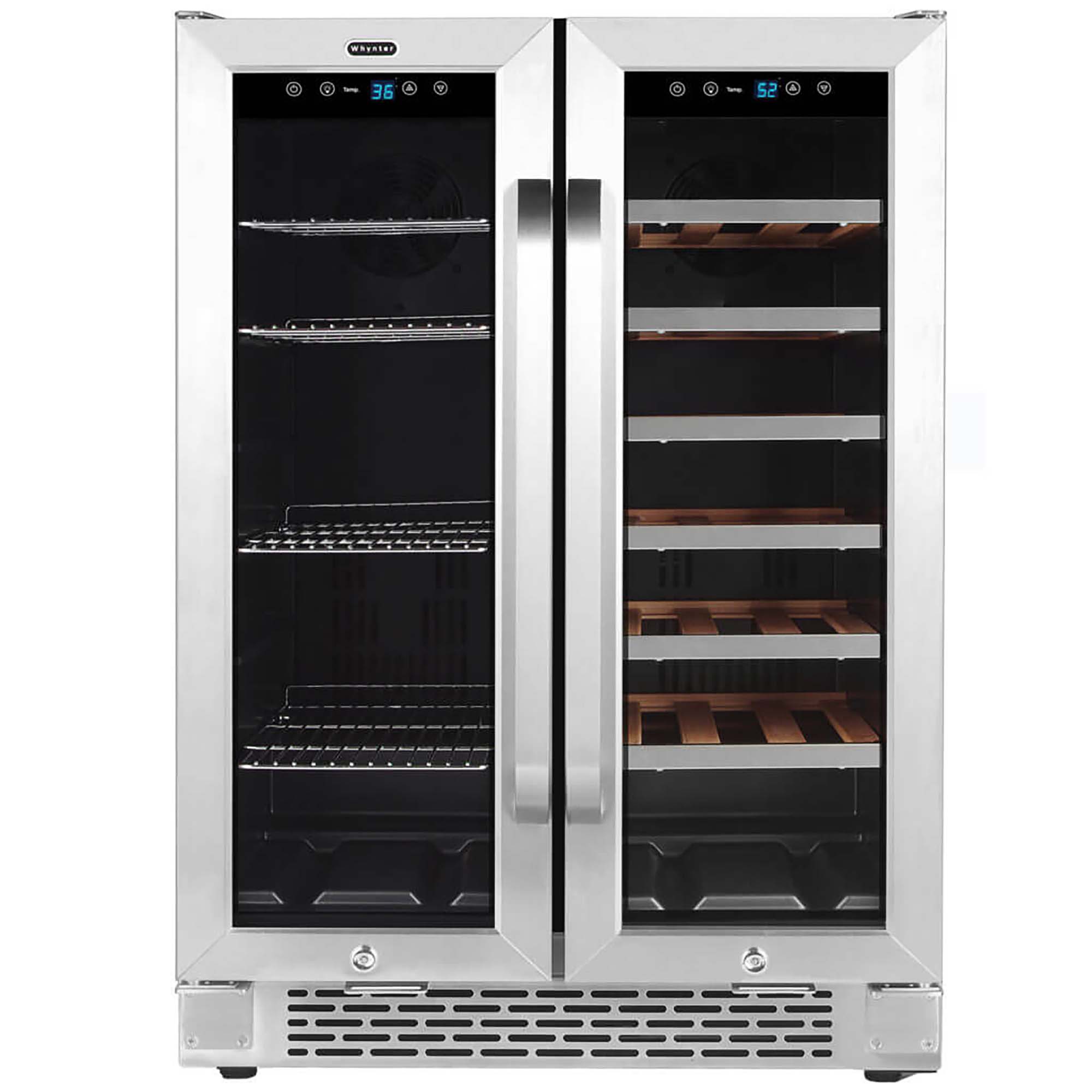
The sleek black design makes the BWB-2060FDS an elegant piece of furniture in any dining room, living room, or basement, and your drinks are easily accessible through 4 removable pull-out sliding wire shelves in the left zone, and 6 in the right zone. With the automatic interior light, the tempered glass door, and the separate temperature and storage zones, this built-in dual zone wine fridge is an stylish and functional product for storing all types of sodas, energy drinks, beers, wines, and more.

Additional information

Cabinet Storage Capacity

4.1 cu. ft.

Bottle Capacity

20 Standard Wine Bottles

Installation Type

Freestanding / Built-in

Beverage Capacity

76 standard 12 oz. can

Zone Type

Dual

Cooling System Type

Compressor

Accessories / Power Cords

10 Removable pull-out sliding shelves Beverage Refrigerator Zone (4 slide-out chrome wire shelves)

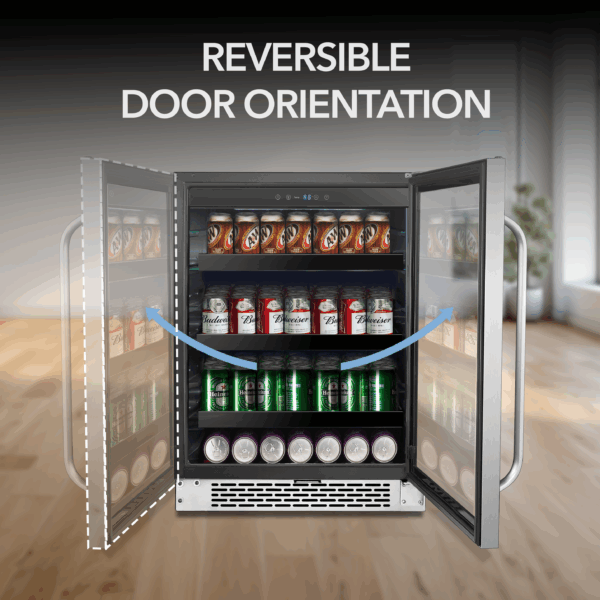
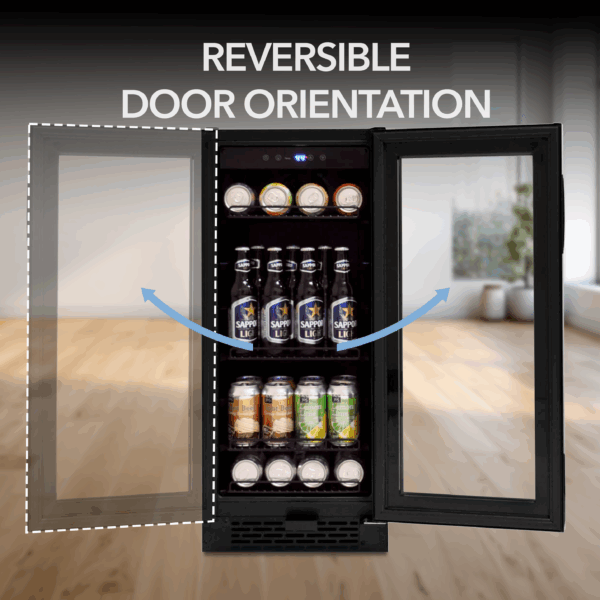
Reversible Door

No

Door Lock

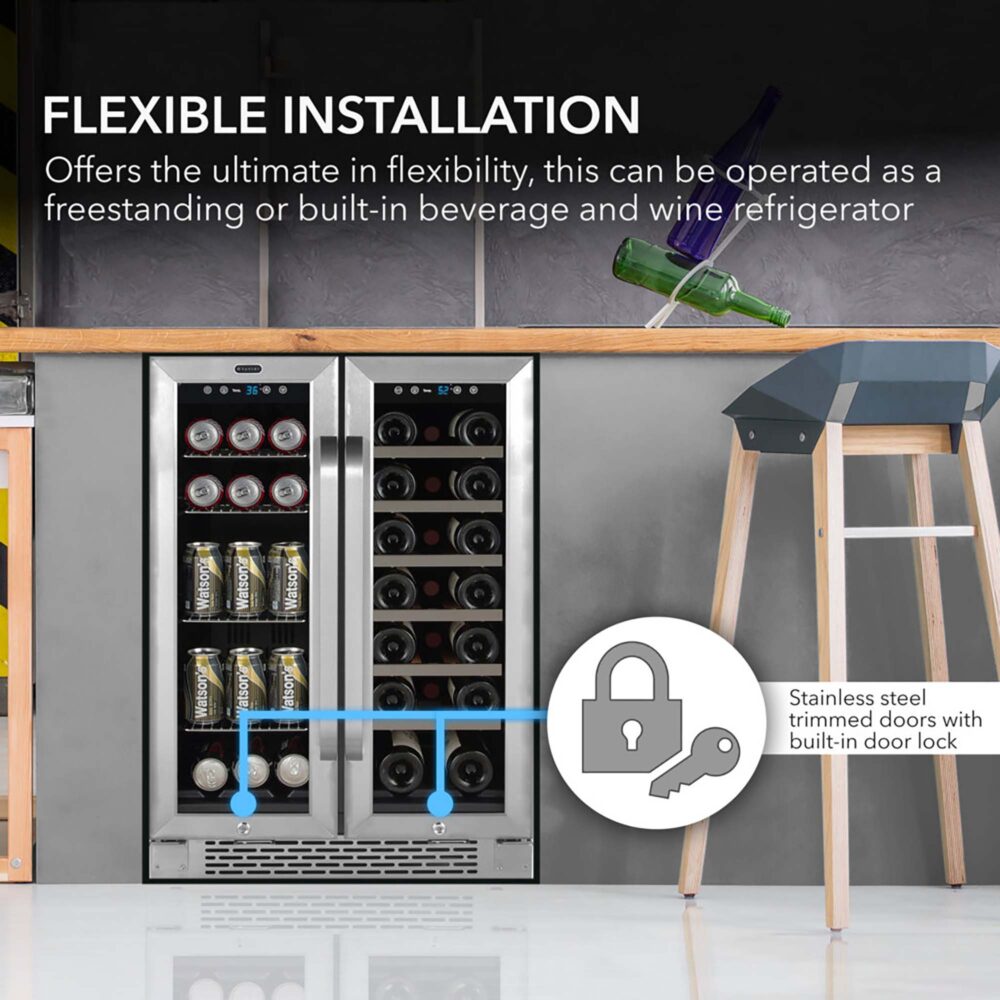
Security Lock and key

Temperature Range

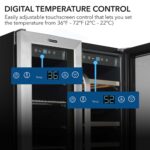
36ºF – 72ºF (Both Zones)

Celsius Option

Yes

Maximum Power Consumption

100 W / 1.0 A

Unit Dimensions

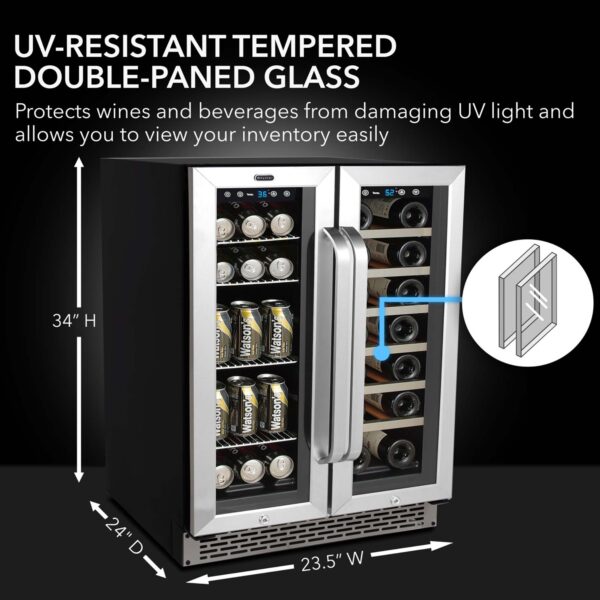
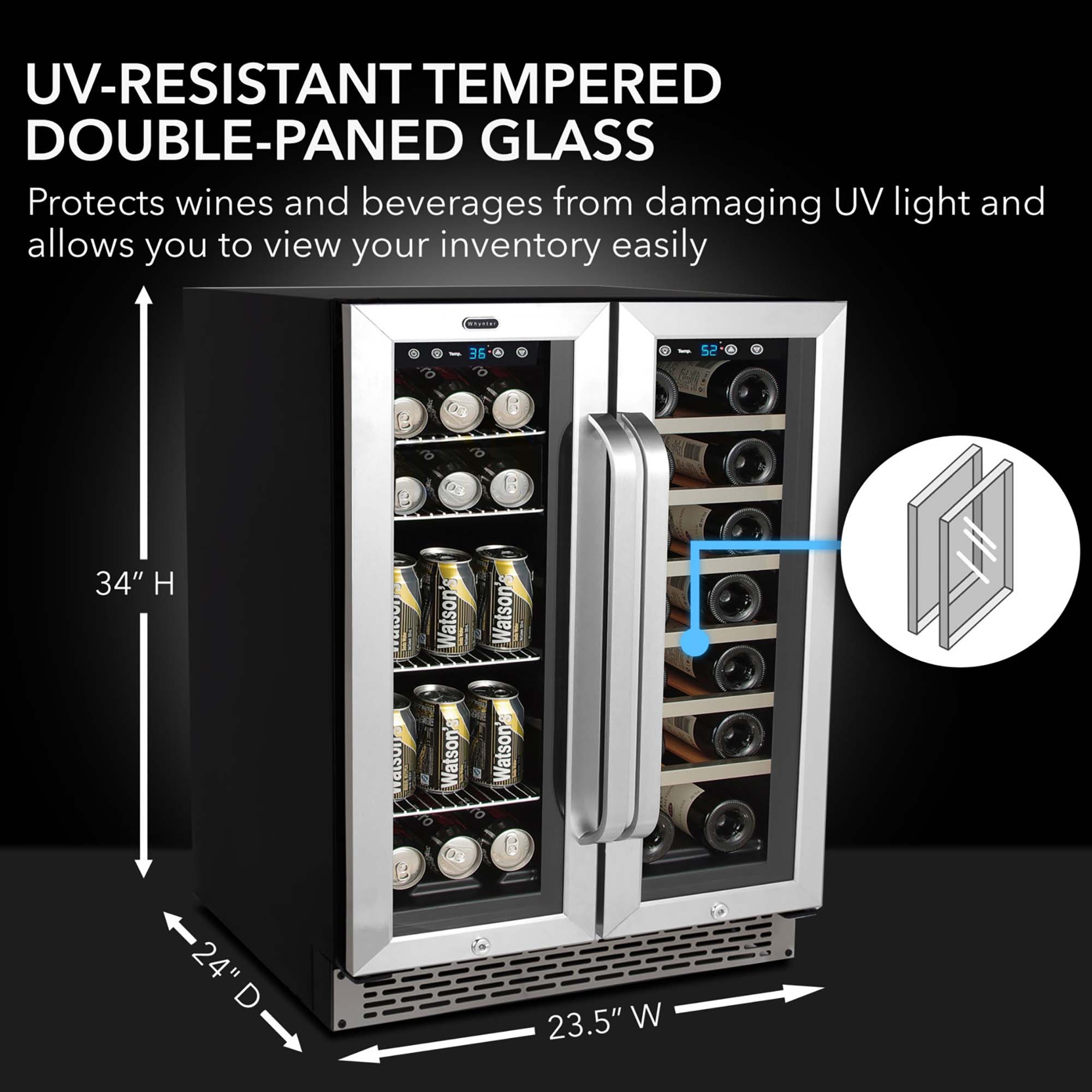
34″ H x 23.5″ W x 22.5″ D (23.75″ D with handles installed)

Noise level (dBA)

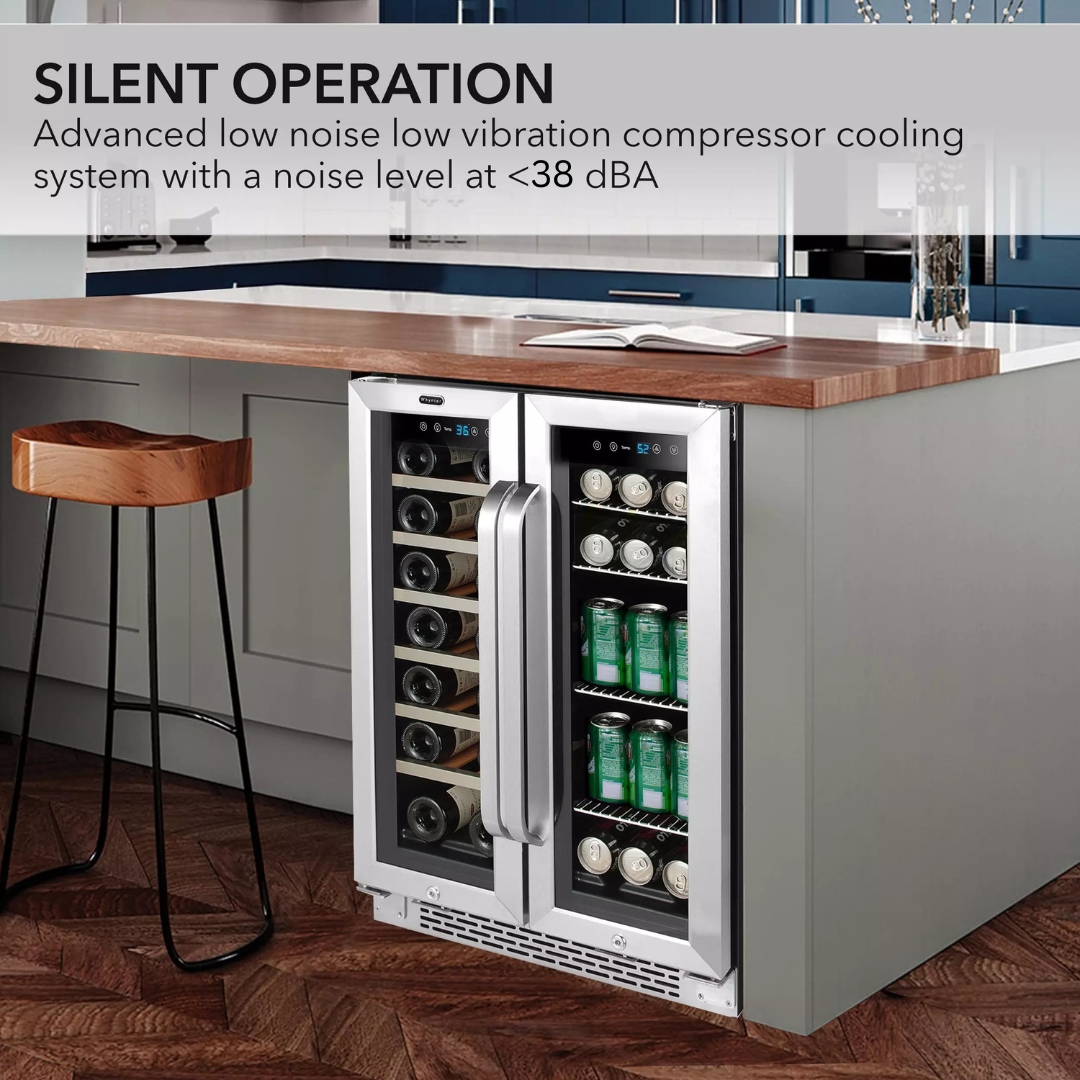
<38

● Capacity
Beverage Refrigerator (Left Zone) Capacity: 76 standard 12oz cans
Wine Refrigerator (Right Zone) Capacity: 20 standard 750ml wine bottles
● Cabinet Storage Capacity: 4.1 cu. ft.
● Dual zones for storing different beverage can and wine varietals
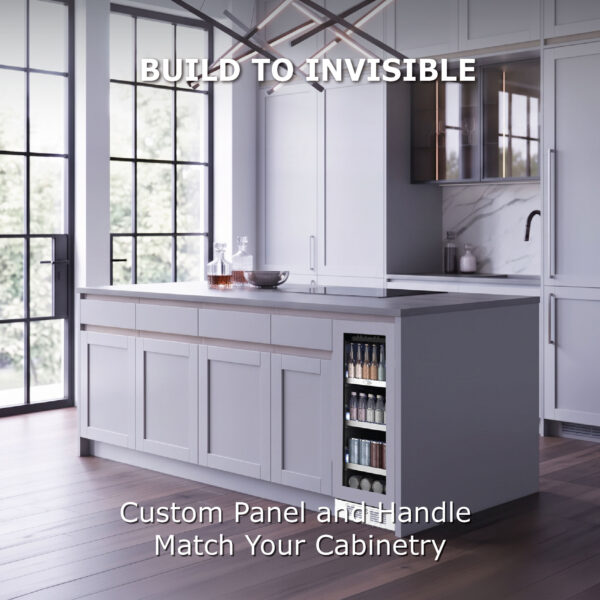
● Built-In / Freestanding Installation
● Luxurious curved handlebars
● Open-door warning system
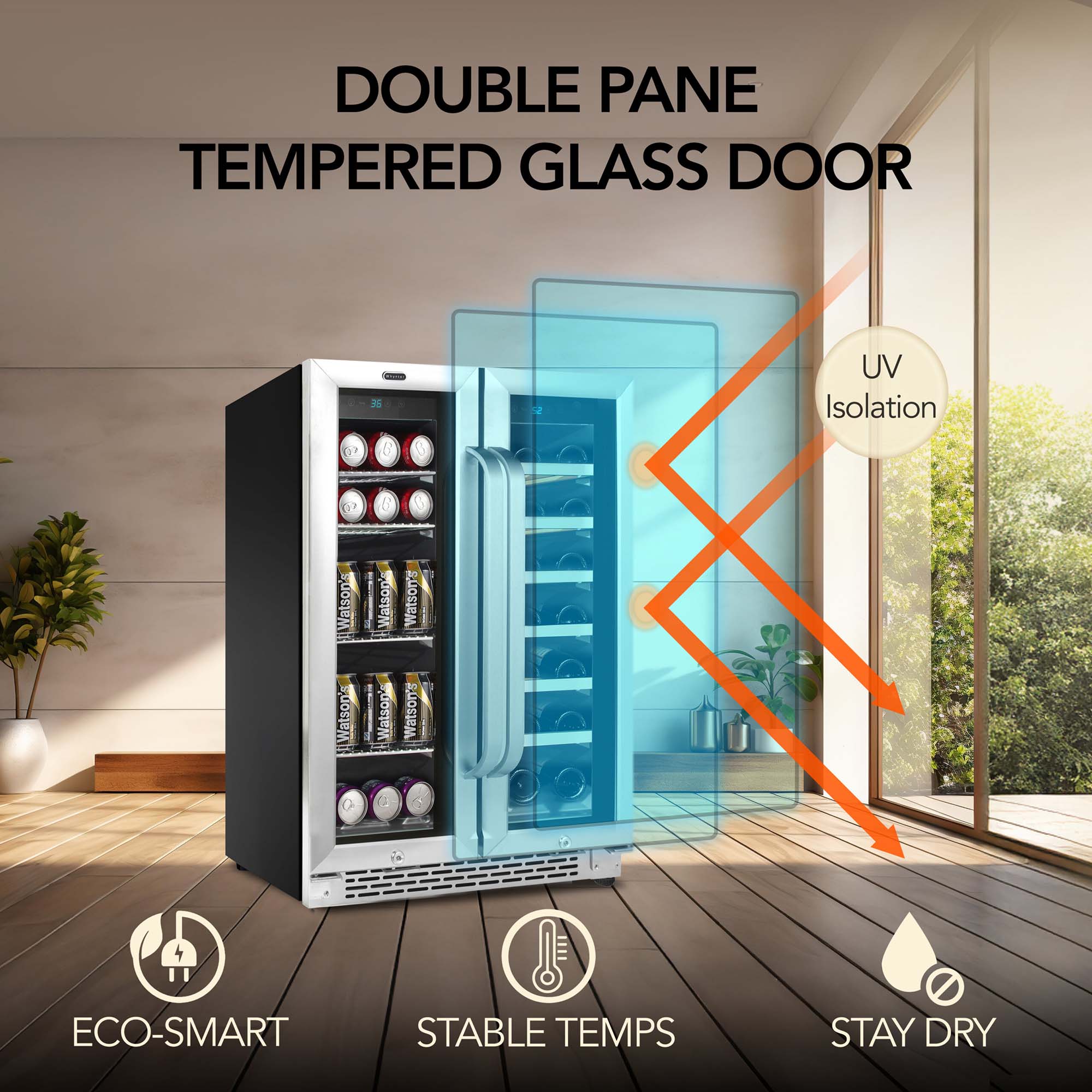
● Tempered double-pane gray-smoked glass for enhanced UV protection
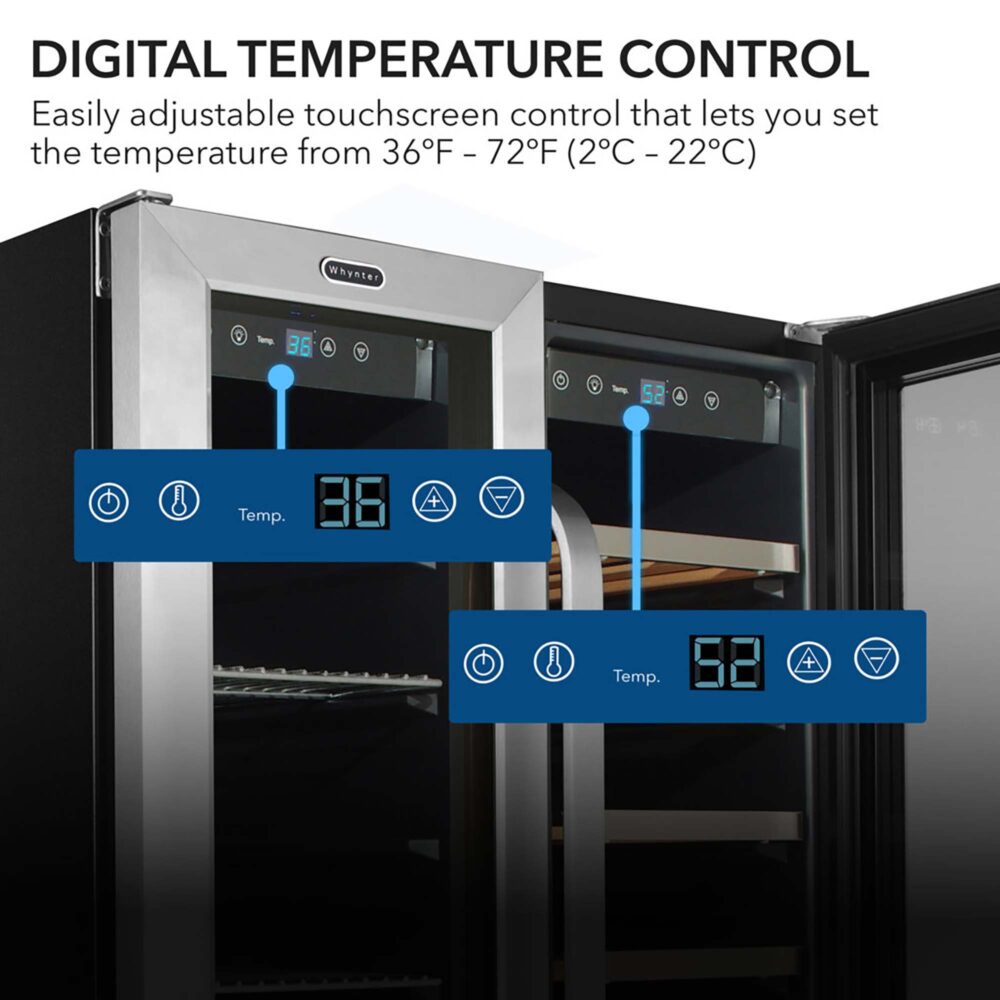
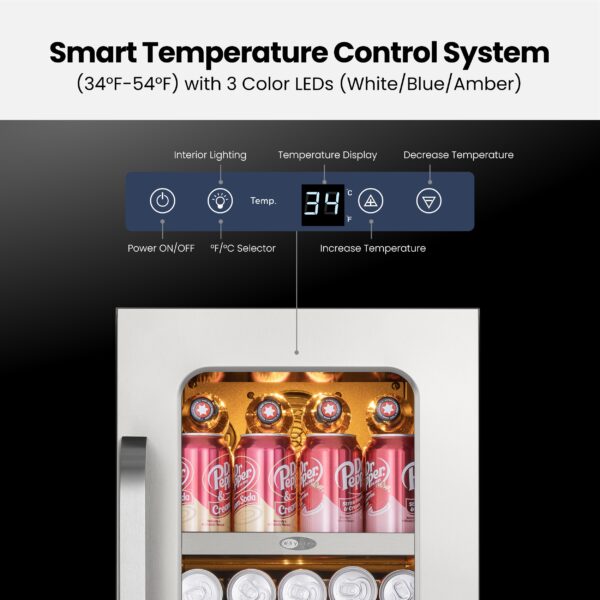
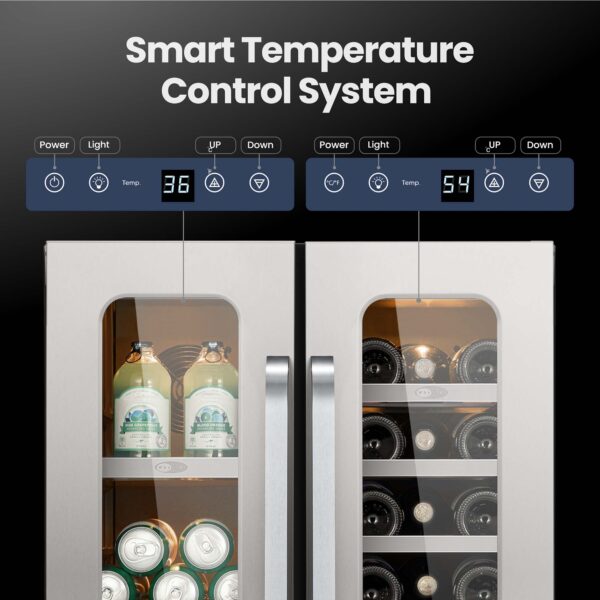
● Adjustable thermostat for both zones
Left Zone : 36ºF – 72ºF / 2ºC – 22ºC
Right Zone : 36ºF – 72ºF / 2ºC – 22ºC
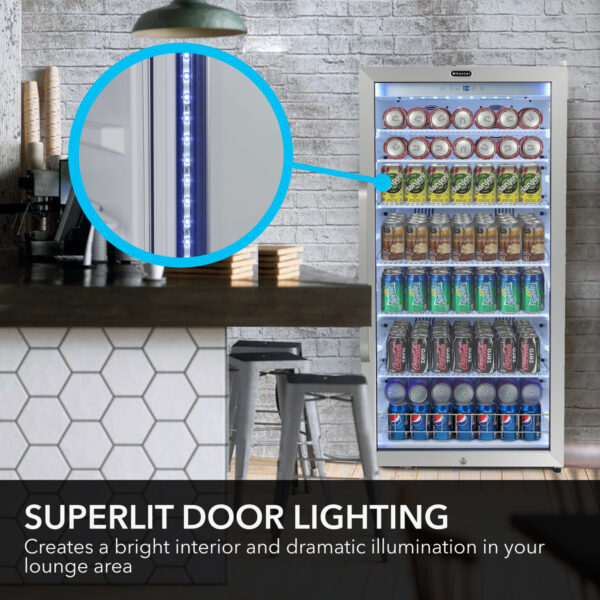
● Soft white LED Interior Lights
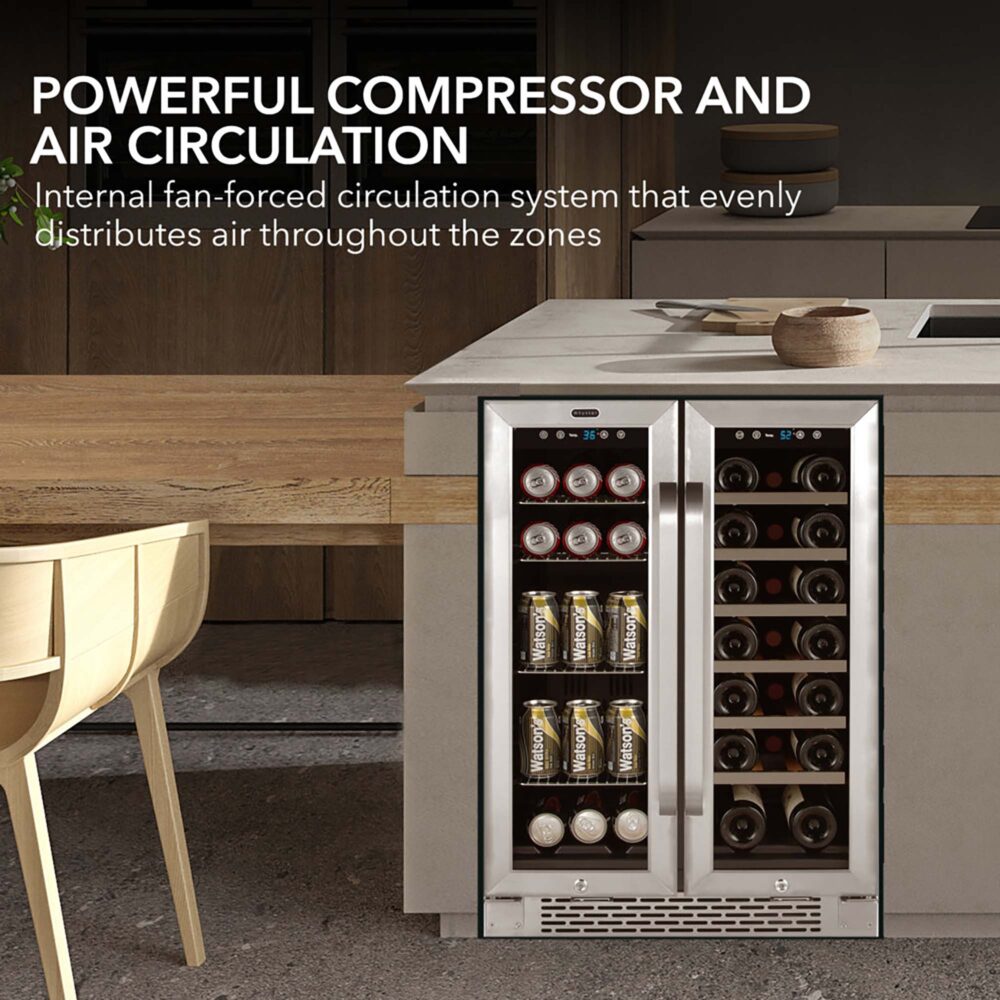
● Internal fan-forced circulation for even temperature distribution throughout the cabinet
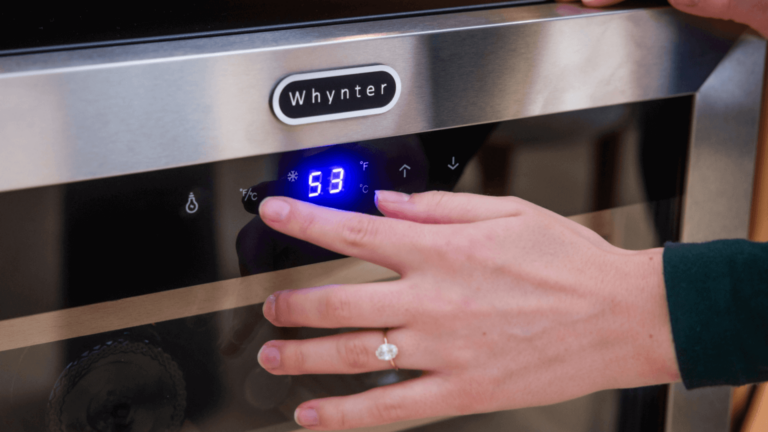
● Fahrenheit and Celsius degree optional temperature indicators
● Cylinder lock and two keys
● 10 Removable pull-out sliding shelves
Beverage Refrigerator Zone (4 slide-out chrome wire shelves)
-Shelf One to Two – 27 standard 12oz cans per shelf
-Shelf Three to Four – 36 standard 12oz cans per shelf
-Bottom Section – 6 standard 12oz cans
Wine Refrigerator Zone (6 slide out stainless steel-trimmed wood shelves)
-Shelf One to Six – 3 standard 750ml bottles per shelf
-Bottom Section – 2 standard 750ml bottles
● Environmentally friendly refrigerant – R600a
● Noise Level: <38 dB
● Voltage: 115V /60Hz
● Power: 100 Watts / 0.9 Amps
● ETL certified
● Product dimensions: 34″ H x 23.5″ W x 22″ D (24″ D with handles installed)
● Package dimensions: 39.5″ H x 28″ W x 28″ D
● Net weight: 99.65 lbs
● Gross weight: 113 lbs
● UPC 852749006368 (BWB-2060FDS)
● UPC 850014459345 (BWB-2060FDSa)

*This unit has a one year limited warranty.

Customer Reviews

Related Products

FAQs

Why do combo refrigerators use side-by-side French doors?

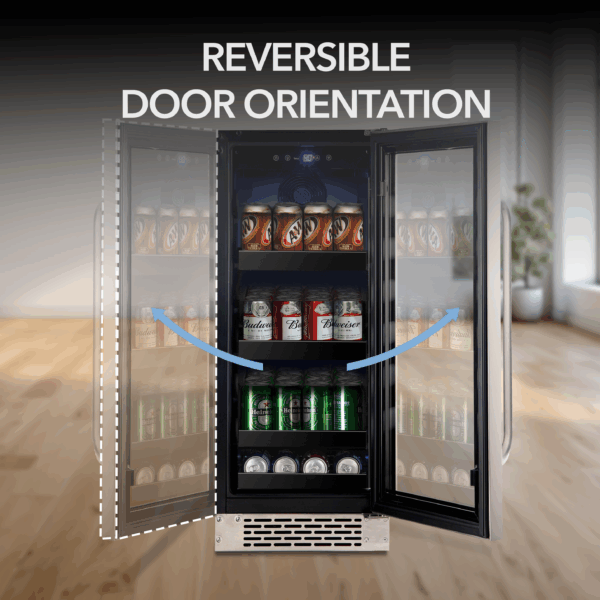
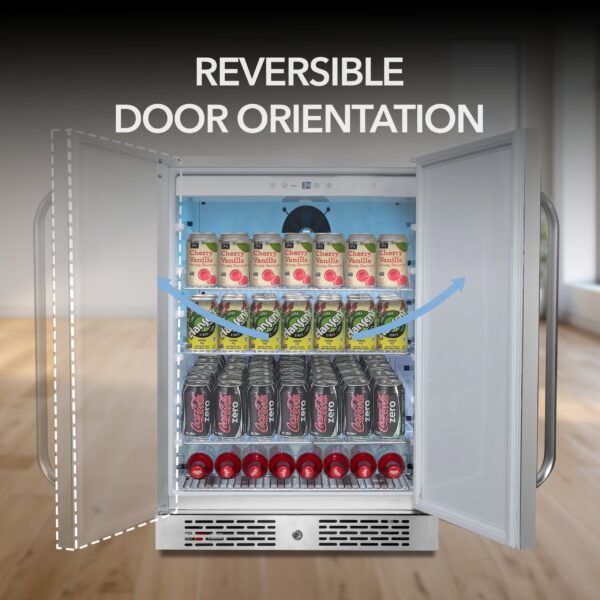
The two glass doors open from the center, one per zone, so grabbing a soda never lets warm air into the wine side. Each zone keeps its own door, its own seal, and on Whynter combo units, its own lock. Because the doors are paired and hinged at the outer edges, they cannot be reversed; the left door always serves the left zone and the right door the right zone.
What is the difference between built-in and freestanding installation?

Built-in (undercounter) units vent through a grille at the front, so they can be installed flush inside cabinetry with little to no side or rear clearance. Freestanding units release heat from the back and sides and need open space around the cabinet. Whynter combo refrigerators are front-venting and rated for both built-in and freestanding use; the installation type is listed in each product’s specifications.

Can a built-in combo unit be used freestanding — or a freestanding unit built in?

One direction works, the other does not. A front-venting built-in unit runs fine freestanding; just leave a few inches of clearance for convenience. A rear-venting freestanding unit should never be enclosed: trapped heat forces the compressor to overwork, reduces cooling performance, and can shorten the life of the unit. If the unit will live under a counter, it must be a front-venting built-in model.

Will a combo refrigerator fit a standard cabinet opening?

Whynter’s combo refrigerators are built to the standard 24-inch undercounter width and stand roughly 34 inches tall, so they slide into a standard 24-inch base-cabinet cutout in place of a cabinet or dishwasher. Check the exact unit dimensions on the product page against your opening, leave a small gap at the top and sides per the installation manual, and keep the front grille unobstructed. An outlet in an adjacent cabinet or behind the unit works best.

How is capacity measured — and will larger bottles or cans fit?

Rated capacity assumes standard containers: 12 oz. cans in the beverage zone and 750 mL Bordeaux-style bottles in the wine zone. Wider Champagne, Burgundy, or Pinot Noir bottles, 16 oz. cans, and specialty bottles take more room and lower the real-world count. Shelves in both zones remove and reposition to open up space for oversized containers; plan capacity around your actual collection rather than the rated maximum.

Do the shelves come out?

Yes. Whynter combo refrigerators use removable, adjustable shelving in both zones — contoured shelves in the wine zone and tempered glass or flat shelves in the beverage zone. Lift a shelf out to fit magnums, 2-liter bottles, or upright wine; move one up a notch for taller cans. Removable shelves also make cleaning the interior easier.

How much clearance does it need for ventilation?

Built-in installations need only a clear, unobstructed front grille; don’t block it with trim or baseboards, and vacuum dust from it periodically. In freestanding use, leave at least a few inches of open space at the back and sides so the compressor can shed heat, and keep the unit away from ovens, radiators, and direct sunlight. Exact clearances for each model are in its user manual, posted on every Whynter product page.

Can I put a combo wine and beverage refrigerator in the garage?

Only if the garage stays within the unit’s rated ambient range, roughly normal indoor room temperatures. In a hot garage, the compressor runs constantly and struggles to hold two zones at temperature; in an unheated winter garage, the thermostat may stop cycling properly, and stored wine is put at risk either way. A climate-controlled garage works; otherwise choose an indoor spot, and don’t use indoor-rated units outdoors.

How loud is a combo refrigerator?

Whynter combo refrigerators run quietly, under about 40 dB, comparable to a library or soft conversation, quiet enough for a bedroom, office, or open living space. You’ll hear a low hum when the compressor cycles and an occasional gurgle as refrigerant moves; both are normal. Persistent buzzing or rattling usually means the unit isn’t level or a bottle is touching a shelf or wall; leveling the feet and reseating bottles typically solves it.

How much electricity does it use?

Not much — even with two zones, a combo unit runs one compressor that cycles on and off, drawing roughly 85–140 watts while cooling. That works out to around 1 kWh per day, a few dollars per month at average U.S. electricity rates. Whynter combo units use eco-friendly R600a refrigerant and are ETL listed. A full cabinet, a shaded location, and fewer door openings all keep consumption down.

What does the activated carbon filter do, and how often should I replace it?

The activated carbon filter scrubs odors from the cabinet air. That protects two things at once: corks breathe, so wine slowly absorbs surrounding aromas, and an often-opened beverage zone stays fresh. The filter works automatically with no setup. Replace it about every six months to one year for best results — replacement filters and part details are available through Whynter product support.

What is a wine and beverage combo refrigerator?

A wine and beverage combo refrigerator puts two coolers in one cabinet: one zone shelved for cans and bottled drinks, and one zone with contoured shelving for wine bottles. Each zone has its own independent temperature control, so beer and soda stay ice-cold while wine rests at cellar temperature in a single footprint, on a single power cord, for less cost and counter space than two separate units.

What should I check if one zone isn’t cooling — or there’s condensation inside?

Light condensation on glass doors in humid rooms is normal; wipe it dry and confirm both doors seal fully. If a zone runs warm, work through this checklist before calling support:

  • Confirm power and check that the zone’s setpoint wasn’t changed — after first startup or a power loss, allow up to 24 hours for both zones to stabilize.
  • Make sure the front grille is unobstructed and vacuum off any dust.
  • Check that the unit is level and each door gasket seals evenly with no gaps.
  • Listen for the circulation fan in the warm zone; airflow should be audible when the compressor runs.

Still warm? Contact Whynter via live chat or the contact page with your model and serial number.

Is a combo unit better than separate wine and beverage fridges?

For most kitchens, bars, and offices, yes. A combo unit needs one cabinet cutout and one outlet instead of two, costs less than buying two comparable units, and still keeps wine and beverages at their own temperatures thanks to independent dual-zone control. Choose separate units only if you need more capacity than a combo cabinet offers; for example, a large wine collection plus a party-scale can fridge.

What warranty comes with Whynter wine and beverage combo refrigerators?

Whynter combo refrigerators include a one-year limited warranty covering defects in materials and workmanship. Register your product and find full terms on the warranty information page. User manuals are posted on each product page.

How does the dual-zone system work?

Each zone has its own temperature control and its own fan-forced circulation, adjustable independently across a wide range, roughly 36–72°F per zone on Whynter combo units. Setting one zone does not affect the other, so you can hold the beverage side in the mid-30s°F and the wine side in the 50s°F at the same time. A temperature memory function restores your settings after a power interruption.

What temperature should I set each zone to?

For the beverage zone: 36–40°F keeps soda, sparkling water, lagers, and light beers ice-cold. For the wine zone: 55°F is the classic cellar temperature for mixed storage; for serving, whites are best in the mid-40s to low 50s°F and reds in the mid-50s to low 60s°F. Pick the temperature for what each zone holds, then leave it alone; steady temperatures matter more than the exact degree.

Can I put wine in the beverage zone, or cans in the wine zone?

Yes. Both zones cover the same full temperature range, so either zone can chill either drink. The difference is shelving: the wine zone’s contoured shelves cradle bottles on their sides, while the beverage zone’s flat shelves stack cans efficiently. Cans sit fine on a flat or glass shelf in the wine zone; wine bottles can stand or lie in the beverage zone with a shelf removed. Match the shelf to the container and set the temperature accordingly.


Related Posts

The Importance of Global Reforestation: One Tree at a Time

The Critical Role of Trees Global reforestation is vital for maintaining a healthy and balanced ecosystem. Trees absorb carbon dioxide, produce oxygen, support wildlife habitats, and contribute to the overall…

Energy-Saving Tips for Using Whynter Appliances

As energy costs rise and environmental concerns grow, maximizing the efficiency of your home appliances becomes increasingly important. Not only does this practice reduce utility bills, but it also minimizes…

Troubleshooting Common Issues with Whynter Refrigerators

Whynter refrigerators are known for their reliability and efficiency, but like any appliance, they can occasionally run into problems. Addressing these issues promptly can save you from unnecessary stress and…

Designing a Home Wine Bar Around Your Whynter Wine Refrigerator

The Importance of Proper Wine Storage Understanding the nuances of wine storage is crucial for any wine enthusiast. Proper storage conditions help maintain wine’s quality, flavor, and longevity. Factors such…
Previous
Next
Select the fields to be shown. Others will be hidden. Drag and drop to rearrange the order.
  • Image
  • SKU
  • Rating
  • Price
  • Stock
  • Availability
  • Add to cart
  • Description
  • Content
  • Weight
  • Dimensions
  • Additional information
Click outside to hide the comparison bar
Compare